
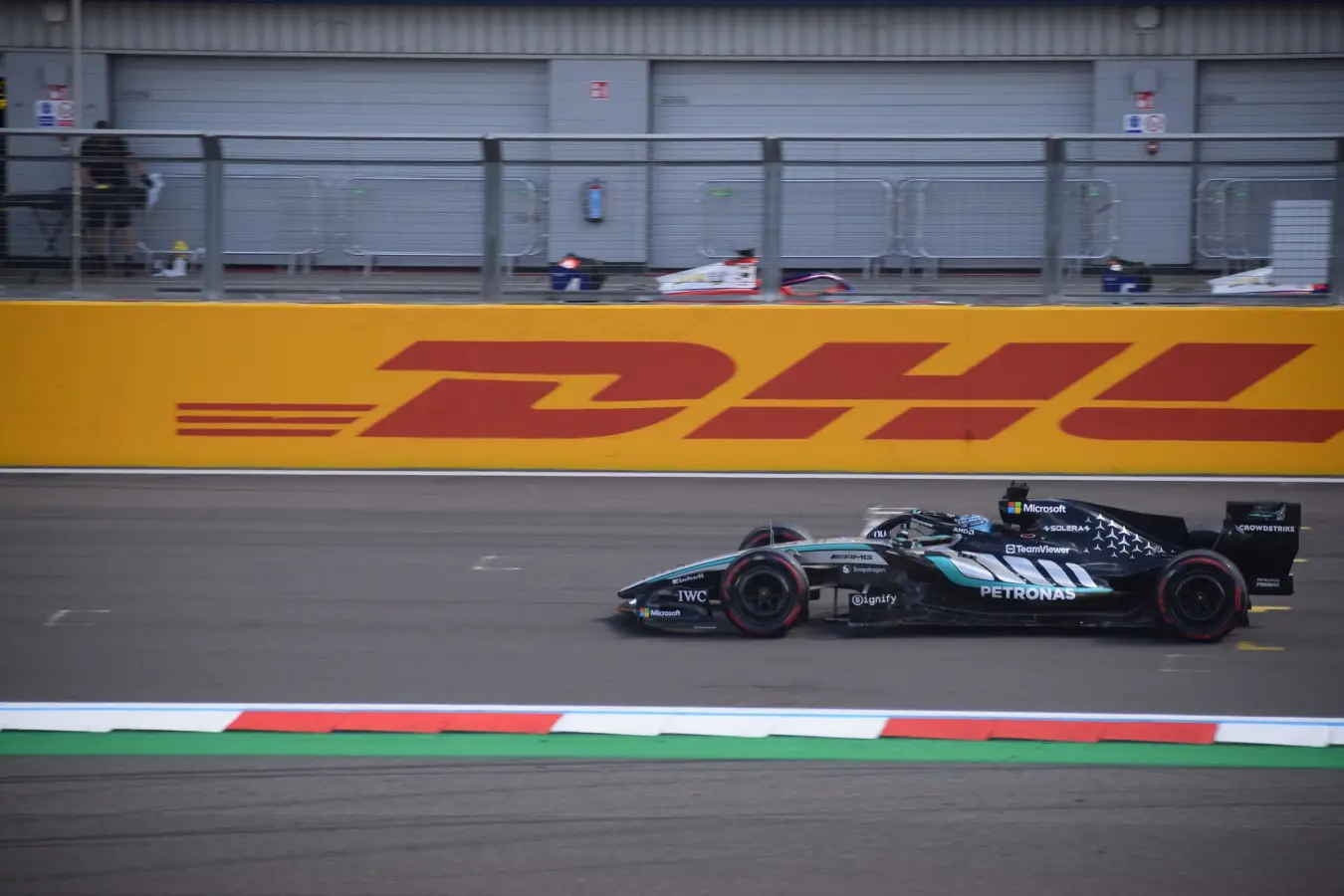
Mercedes have introduced an extensive aerodynamic upgrade for the W17 at Sepang, giving the Brackley-based team its first significant Formula 1 development package since the Montreal round in May.
The changes have arrived for the Bahrain Grand Prix in Malaysia, held at Sepang International Circuit, and are intended to increase the downforce generated by the car’s bodywork. Their first meaningful examination will come at a venue where high temperatures, a notably abrasive surface and likely tyre degradation are already expected to complicate the weekend.
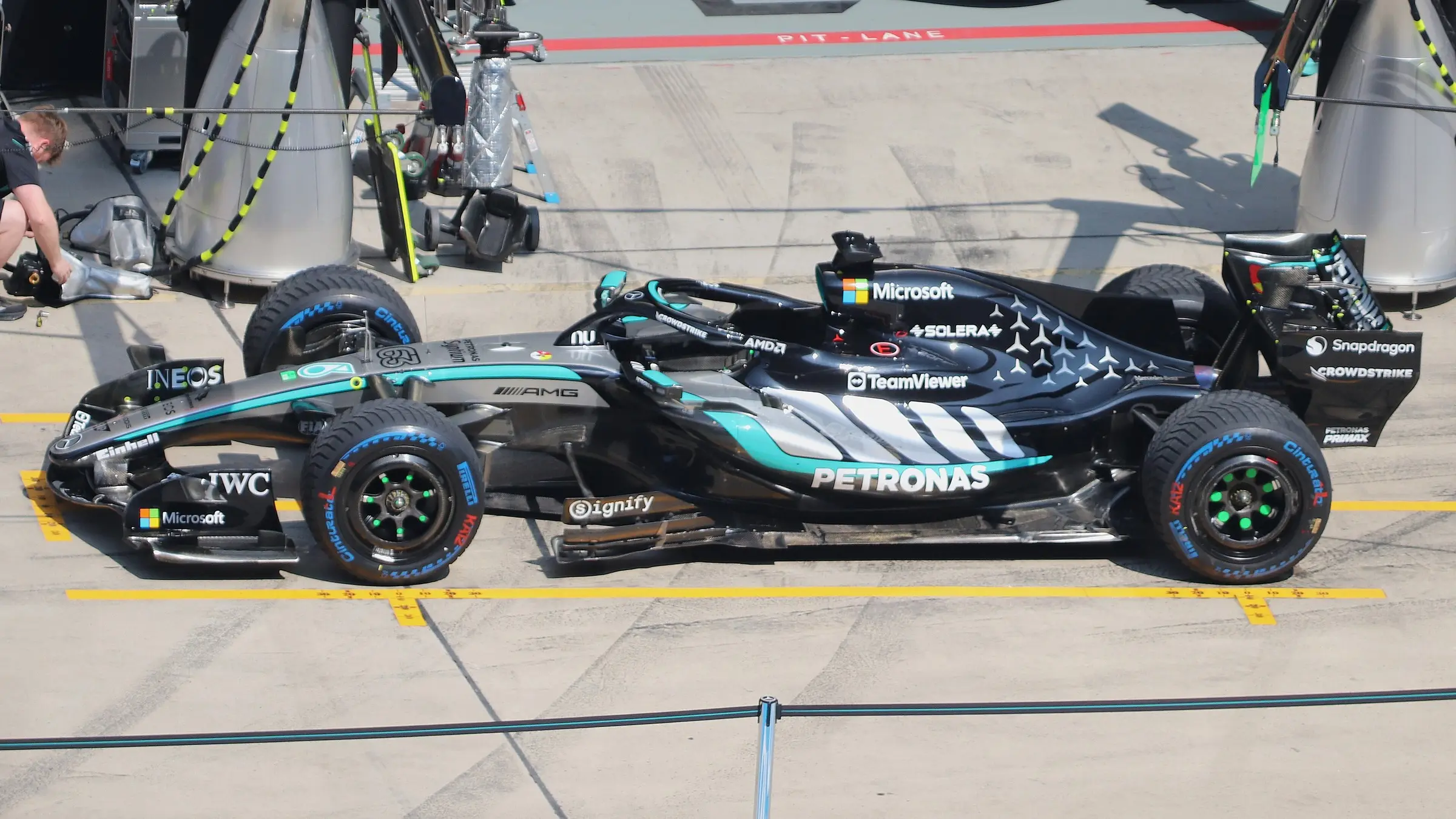
RacingNews365 reported that the revised package is most apparent around the sidepods, while the floor has also been substantially reworked around the diffuser throat. The Race said the update affects all body surfaces other than the front and rear wings, describing it as a broad refinement rather than a departure from Mercedes’ existing aerodynamic concept.
Sidepods and floor are central to the package
According to RacingNews365, the new sidepod profile includes a straighter ramp towards the rear of the car and bodywork which drops lower ahead of the rear wheels. The report said changes to the cockpit-level and rear engine-cover gills also make the slimmer rear section more apparent.
The same report said the sidepod work conceals revised internal airflow arrangements, while the floor changes alter pressure distribution near the diffuser exit. It reported that the combined package is understood to aim for a worthwhile downforce increase without a corresponding drag penalty.
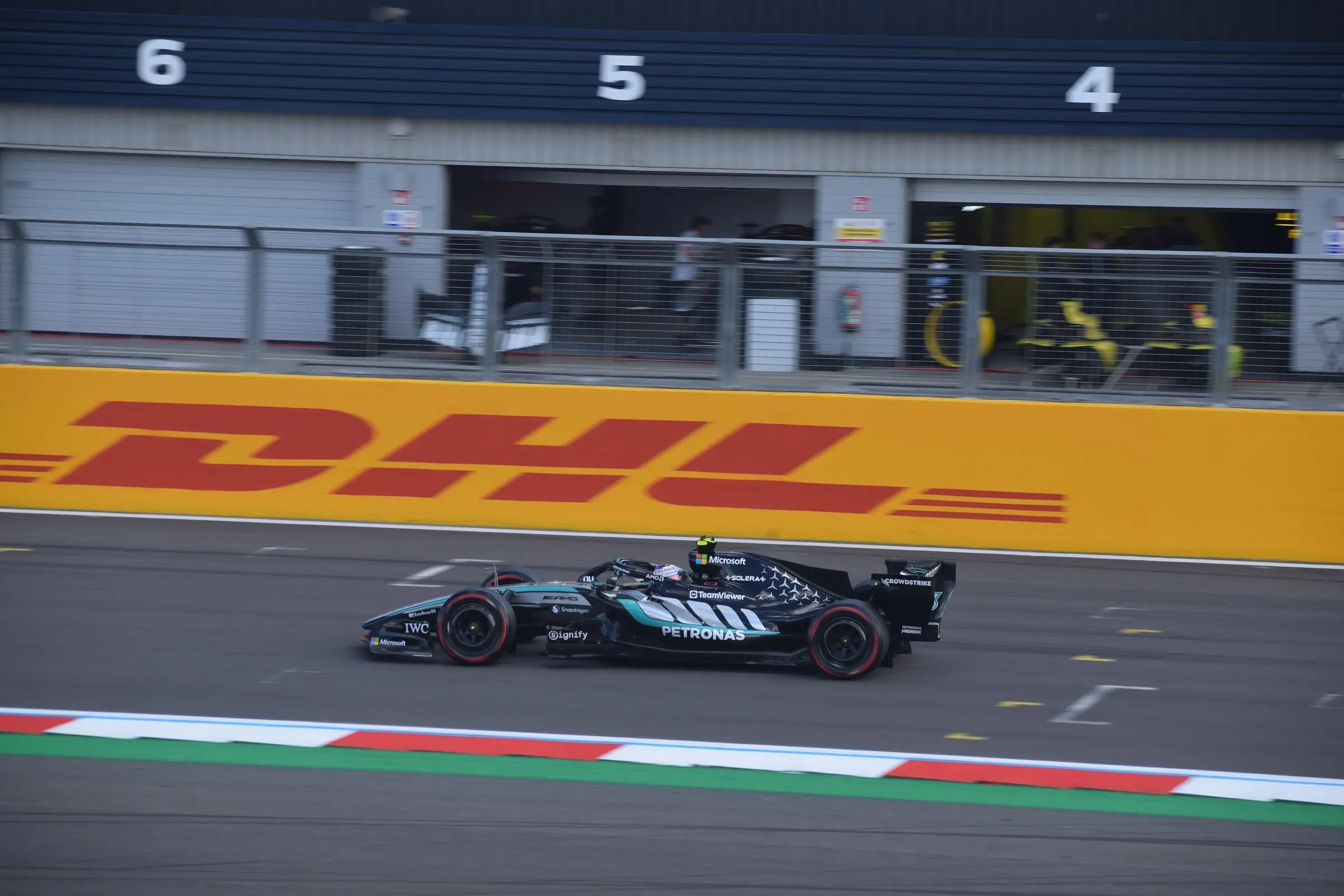
The Race’s technical assessment focused on smaller visible revisions nearer the front of the car as well, including altered vane and support profiles around the bargeboard and floor-leading-edge areas. It suggested those details are intended to manage turbulence generated by the front wheels and preserve the airflow structure feeding the underfloor and sidepod undercut.
Neither report establishes a measured performance gain before competitive running. The Race said there was an expectation outside the team that the package could be worth about three tenths of a second per lap, but stressed that it is difficult to quantify an upgrade’s effect from outside a team. That figure should therefore be treated as an unverified pre-weekend estimate rather than a result.
A demanding circuit for a first test
Sepang offers a significant test environment because its conditions could expose both gains and compromises in car set-up. RacingNews365 said Mercedes had targeted the circuit from an early stage of the W17’s design programme, citing its two long straights and sequences of fast corners. The outlet also identified slow-corner exits and traction as areas where the existing car has lacked downforce.
However, outright aerodynamic performance will not be the only variable. Formula 1 reported that drivers expect tyre wear to be a defining issue at Sepang, whose rough surface has become even more abrasive over time. Carlos Sainz said he expected greater degradation than in recent events, while Oscar Piastri described the surface as looking like sandpaper and anticipated a difficult weekend.
World Championship leader Kimi Antonelli said the track walk had revealed the roughest tarmac he had encountered, with two or three pit stops a possible race scenario because of the heat and surface. His Mercedes team-mate George Russell added that surface overheating could make it harder for drivers to remain close enough to attack after an overtake.
That context means Mercedes’ first outing with the package cannot be reduced to a single qualifying comparison. If the revised W17 performs as intended, it could strengthen the car through the mix of slow exits, fast corners and long straights at Sepang. But tyre behaviour, strategy and weather remain variables which may obscure a straightforward reading of the new parts’ impact.
For Mercedes, the significance lies in bringing a major update to a car that has already been competitive this season. The Sepang weekend should provide the first evidence of whether the team’s latest technical direction adds usable performance across the conditions that make this circuit unusually demanding.