
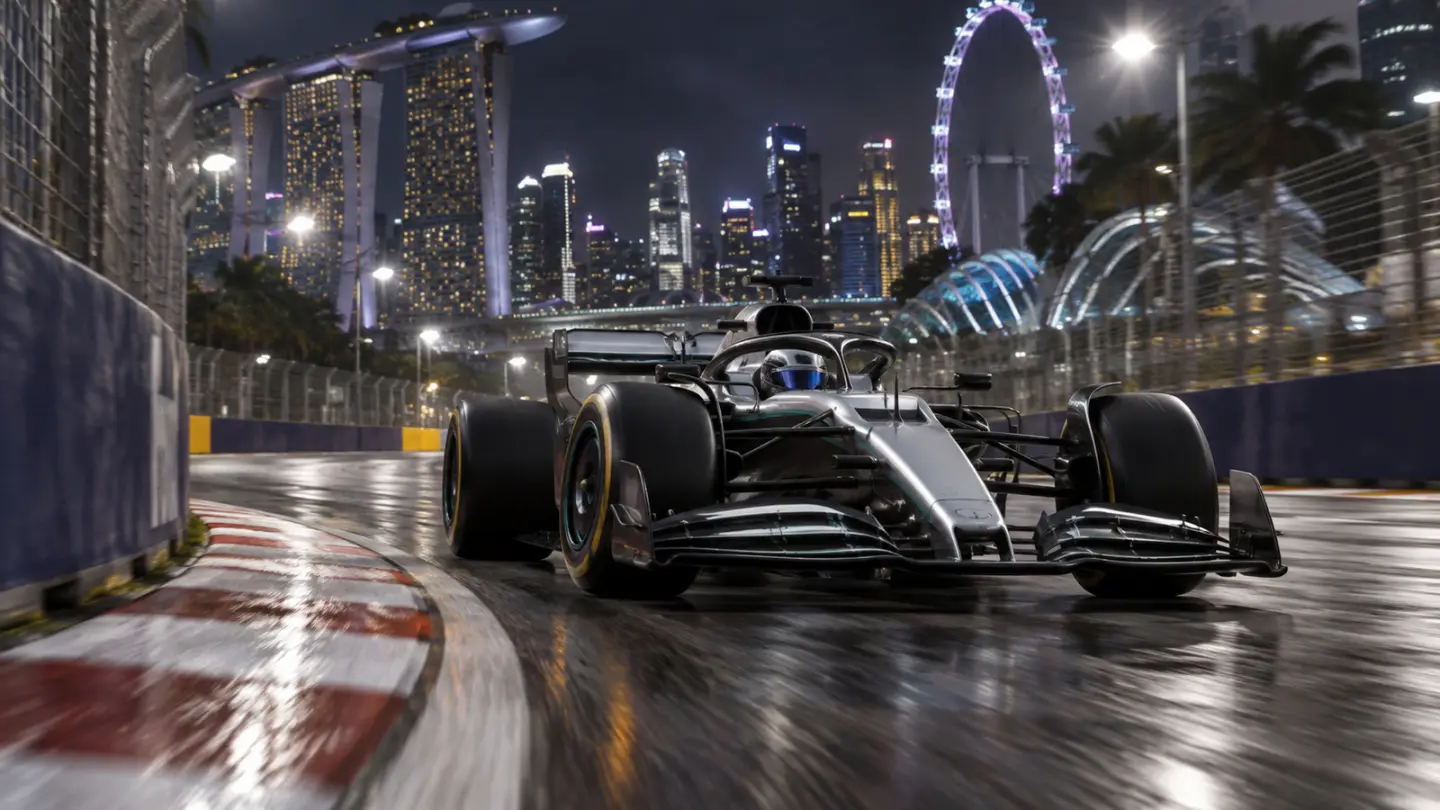
George Russell set the fastest time in the Singapore Grand Prix’s only practice session, beating Ferrari’s Charles Leclerc by 0.198 seconds on Friday. The Mercedes driver’s 1:32.274 lap put him ahead of Leclerc and McLaren’s Lando Norris, but the differing tyre choices and the daytime conditions mean the result offers only a limited guide to Sprint Qualifying and the night-time Grand Prix.
Russell completed 28 laps at Marina Bay and found his best time on Soft tyres during the closing minutes. Leclerc was second on 1:32.472, while Norris was third on 1:32.547. Ferrari’s Lewis Hamilton was fourth, 0.499sec behind Russell, and McLaren’s Oscar Piastri fifth, 0.564sec adrift.
Max Verstappen was sixth for Red Bull, 0.732sec off Russell’s benchmark, but his quickest lap came on Medium tyres. Championship leader Kimi Antonelli, seventh for Mercedes, also set his best effort on Mediums and was 1.251sec behind his team-mate. That tyre difference is important when judging the apparent gap between the two Mercedes drivers: Russell’s headline time cannot be treated as a direct like-for-like comparison with Antonelli’s best lap.
Mercedes split its cars for upgrade assessment
The session was particularly significant for Mercedes because the team ran two specifications of car. Russell returned to the earlier package, while Antonelli retained the recent upgraded configuration. Mercedes team principal Toto Wolff said the arrangement was intended to help the team understand the behaviour of the upgrade after a difficult previous weekend at Sepang.

According to Wolff, the newer version had appeared more difficult to drive in the first Singapore running, while the older car looked more stable and offered better grip. He stressed, however, that this was only one practice session and that Mercedes needed more time before reaching firm conclusions. He also said running two different cars was a compromise, but one Mercedes considered necessary to establish the best direction for future development.
Russell’s quickest lap therefore gave the older specification an encouraging opening data point, rather than proving that it is definitively faster. Antonelli’s quickest lap came on Medium tyres, unlike Russell’s Soft-tyre benchmark, and he ran deep at Turn 16 on his final attempt, further reducing the value of a simple time-sheet comparison.
Why practice does not settle the Singapore order
Singapore’s Sprint format gave teams only one hour of non-competitive running before Sprint Qualifying. The official FIA report said track temperatures reached 53C during practice, whereas Sprint Qualifying and the Grand Prix are scheduled in night-time conditions. The temperature and track-state change make the daytime running an imperfect reference for the night sessions, when teams may need to revise their approach.
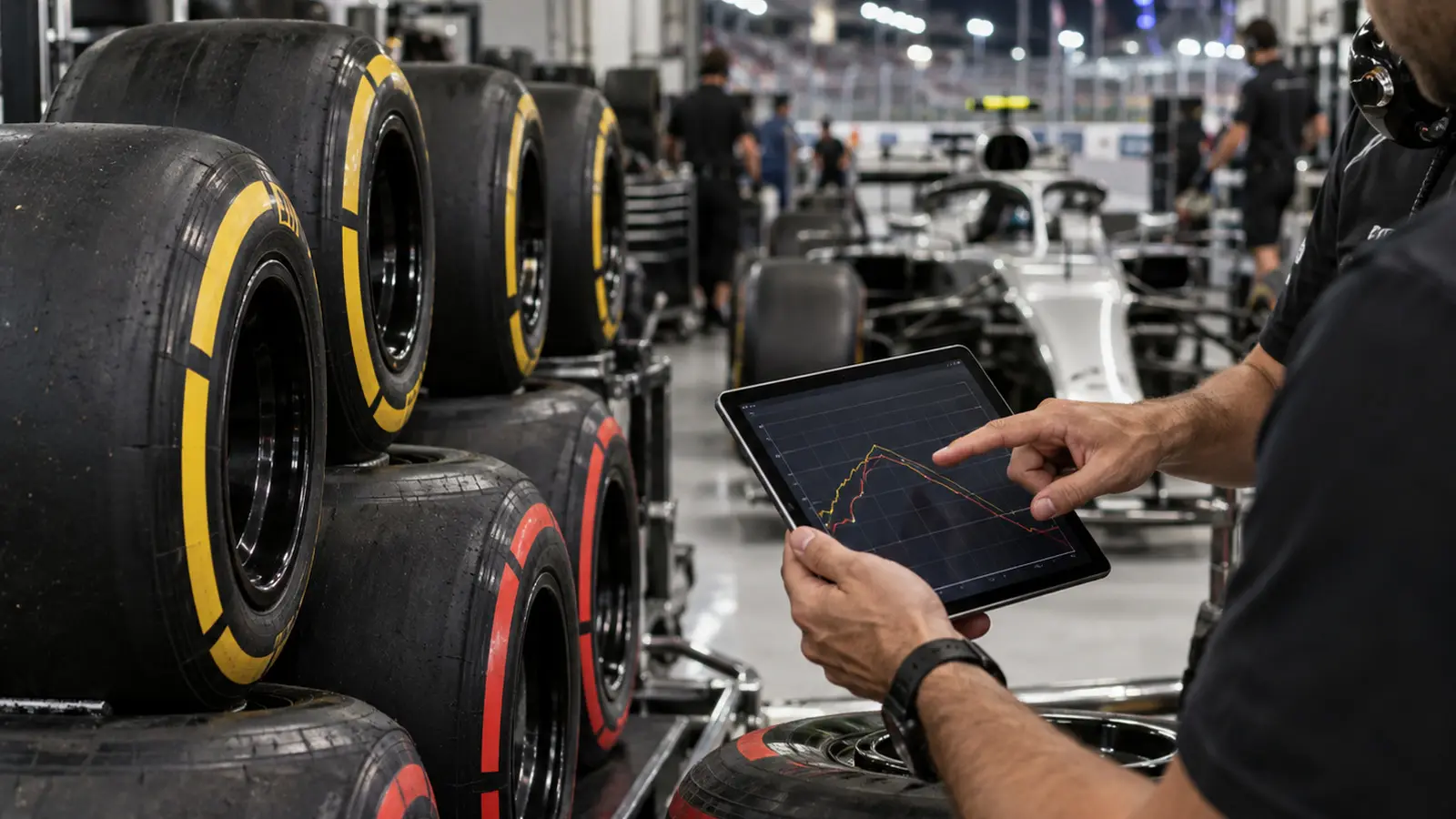
There was also a brief Virtual Safety Car after Audi’s Nico Hülkenberg stopped near the pit exit with what he reported as a gearbox problem. The interruption came with around 20 minutes left, before the field moved into its late-session performance runs. Drivers had initially concentrated on Hard tyres as they assessed a dusty circuit, which added another variable to the evolving order.
Russell was among the first of the frontrunners to switch to Softs and initially went quickest with a 1:32.864. Hamilton then briefly took first place before Russell improved by 0.547sec to the eventual fastest lap inside the final five minutes. Leclerc’s second-place time left the top two separated by less than two tenths, while Norris was only another 0.075sec behind the Ferrari.
With Russell set to start Sunday’s Grand Prix from the back, Sprint Qualifying is the next competitive session. The combination of different compounds, changing track conditions and Mercedes’ car experiment means the competitive picture remains unsettled.
Verstappen’s Medium-tyre pace is another reason for caution. His 1:33.006 was 0.519sec quicker than Antonelli’s Medium-tyre effort, but it was still 0.732sec behind Russell’s Soft-tyre benchmark. The figures show why Friday’s order is more useful as a record of separate programmes than as a settled prediction for the rest of the weekend.