
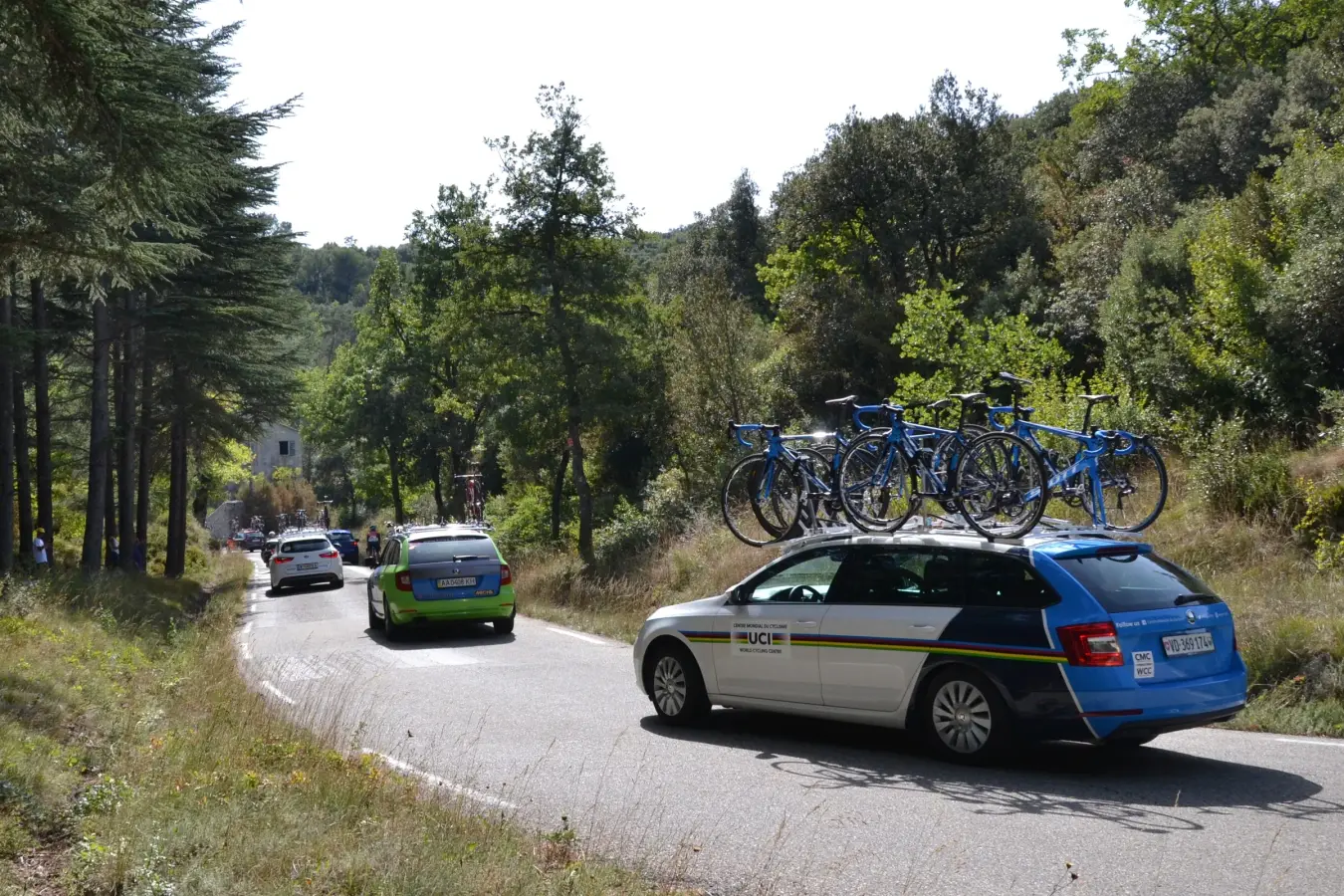
The UCI has reaffirmed its intention to introduce widespread GPS safety tracking in men’s and women’s WorldTour road races, but has not announced a timetable for implementation in men’s and women’s WorldTour races.
Its management committee said during the Road World Championships in Montreal that the immediate task was to develop the operating protocols, regulations and implementation timetable as quickly as possible. The proposed systems are intended to provide real-time location data for riders and race vehicles during events.
The announcement commits the UCI to developing a framework for broader use, but does not provide a specific implementation timetable. Protocols, the regulatory framework and the implementation timetable remain to be developed.
WorldTour racing identified as the first priority
The UCI said men’s and women’s WorldTour races would be the initial focus for the deployment. GPS tracking is already in operation at the Montreal World Championships, according to the governing body, which has said it will also be used at future editions of the event.
The issue has remained prominent since Swiss junior Muriel Furrer died after crashing off the road at the 2024 World Championships in Zurich. Road.cc reported that Furrer was unattended for about 85 minutes after the incident. The case has kept the debate over GPS rider tracking prominent in cycling.
However, earlier efforts to extend tracker use across racing have exposed disagreement over implementation. At the 2025 Women’s Tour de Suisse, five teams withdrew after declining to take part in a UCI safety-tracker trial. The teams said there had not been proper consultation, although the trial proceeded.
That history explains why the committee’s pledge is significant but not yet a completed policy. The UCI has yet to develop the protocols and regulatory framework for the rollout.
Barrier rules and crash data add to safety agenda
The tracking decision formed part of a wider package considered by the committee as road-race safety remains under scrutiny. Road.cc noted that the recent death of Fin Tarling on the Volta a Portugal course, following a collision involving a member of the public driving on the course, had added to the debate around racing risk.
The UCI has also approved requirements for barriers in the final 200 metres of races. The standards are based on a study by the University of Applied Sciences and Arts Western Switzerland Valais-Wallis, and all WorldTour races will be required to meet them from 2027. The protocol has been made available to barrier manufacturers.
Early data from the UCI’s crash study, which began at Paris-Nice in March 2026 and covers men’s and women’s WorldTour events, has indicated that injuries are more frequent and more severe in the women’s peloton. The governing body said recovery before a return to competition was, on average, twice as long for female riders.
The study had collected information from 90 men’s race days and 37 women’s race days. It found that crashes in women’s races involved an average of 4.7 riders, compared with 2.7 in men’s races.
Road.cc also reported that the early data showed medical attention was needed 1.5 times more often in women’s races than in men’s races. The UCI said the study was intended to inform future safety measures and assess their effectiveness. The findings are early results from an ongoing project.
Those figures do not establish why the reported differences have occurred, but they give the UCI a stated basis for continuing its study across both WorldTour pelotons. The governing body has presented the project as a means of guiding future safety measures and evaluating whether they work. Its published findings therefore remain evidence from an ongoing study rather than a final assessment.
The UCI said the study is intended to guide future safety measures and assess their effectiveness. For now, the most concrete next step on tracking is the creation of the regulatory framework that would govern a WorldTour rollout.