
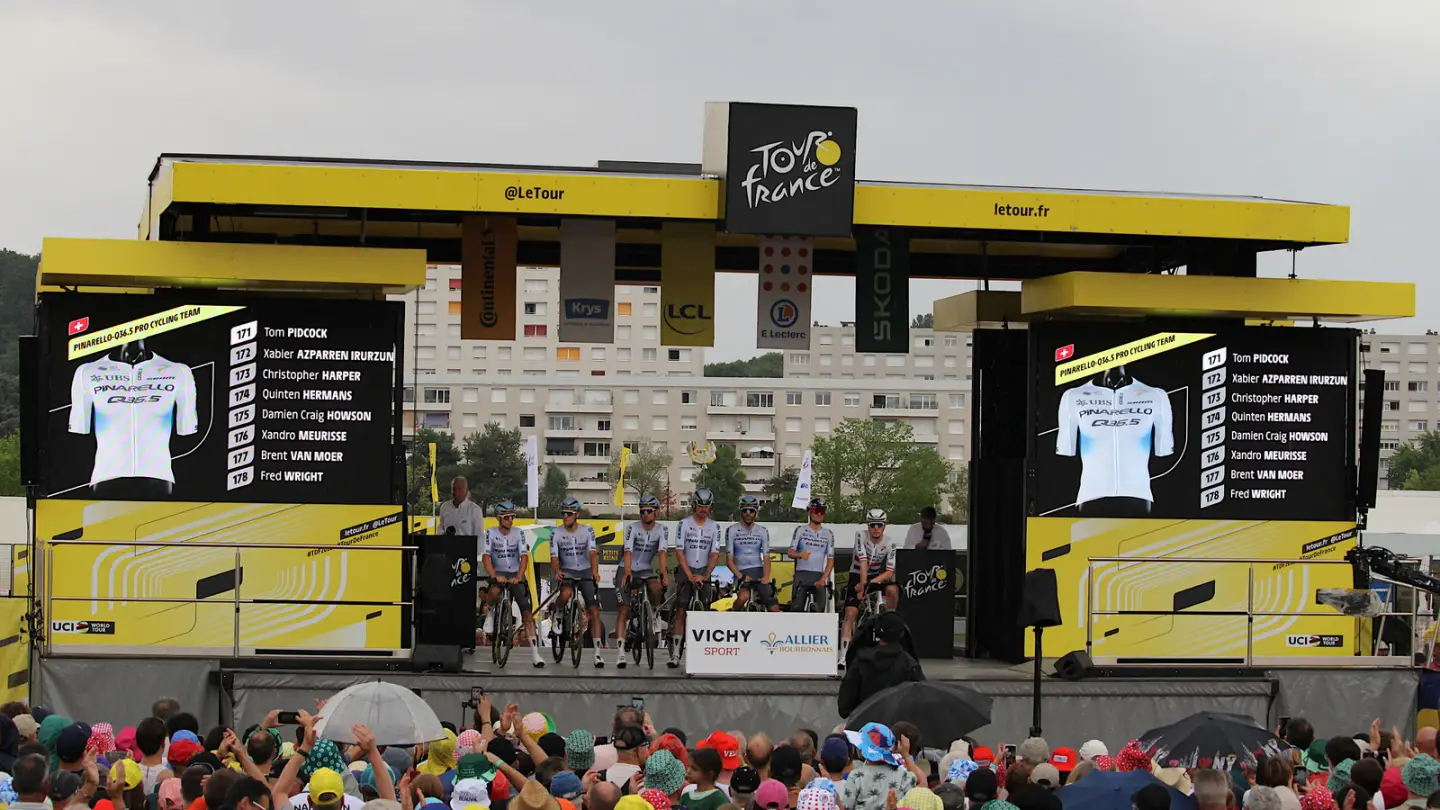
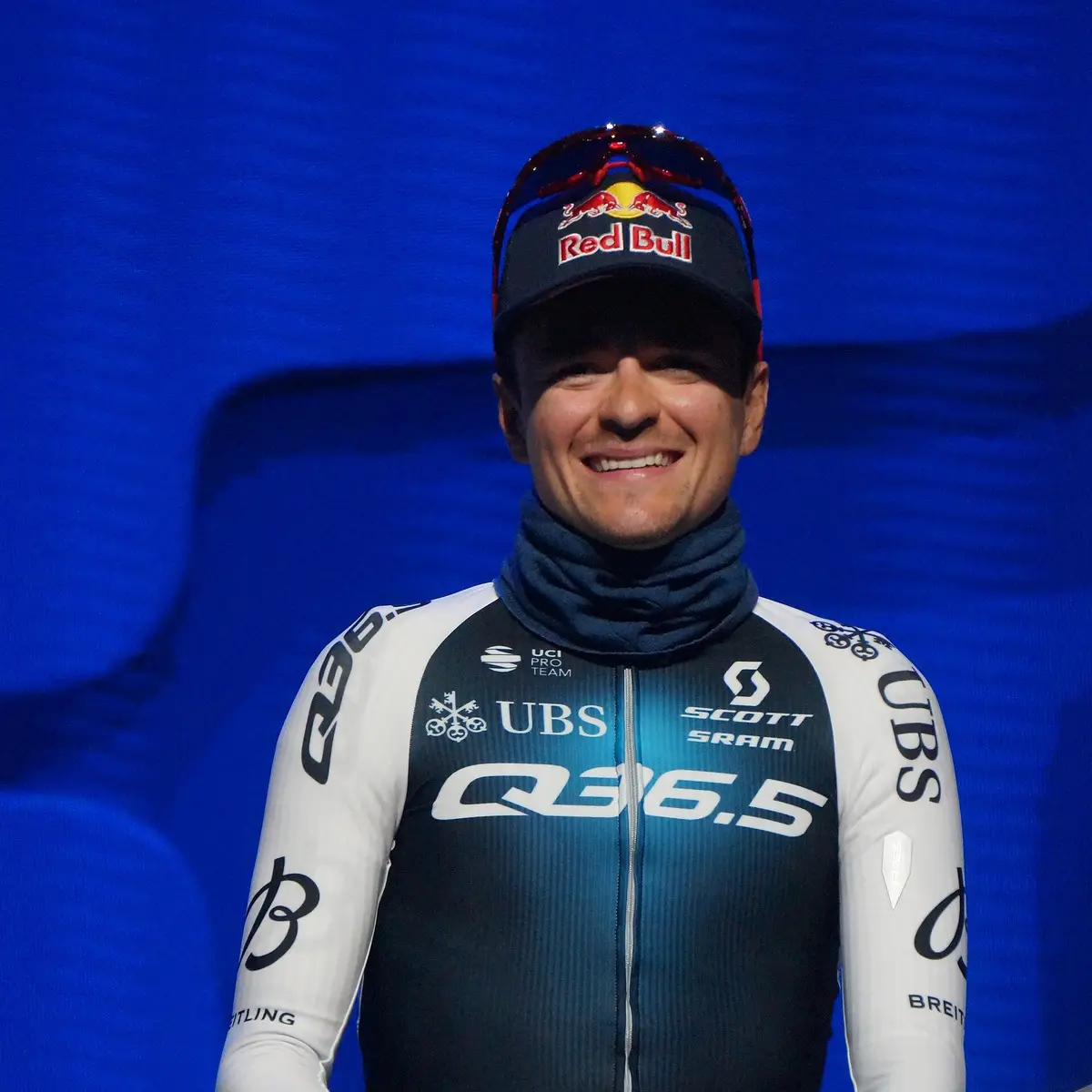
Tom Pidcock said he considered stopping during Tuesday’s Tre Valli Varesine after two Pinarello-Q36.5 team-mates were hit by a police motorcyclist travelling into the path of the peloton. Pidcock nevertheless continued to finish second in the Italian one-day race, but said the collision had left him angry because the riders involved had been working in support of his result.
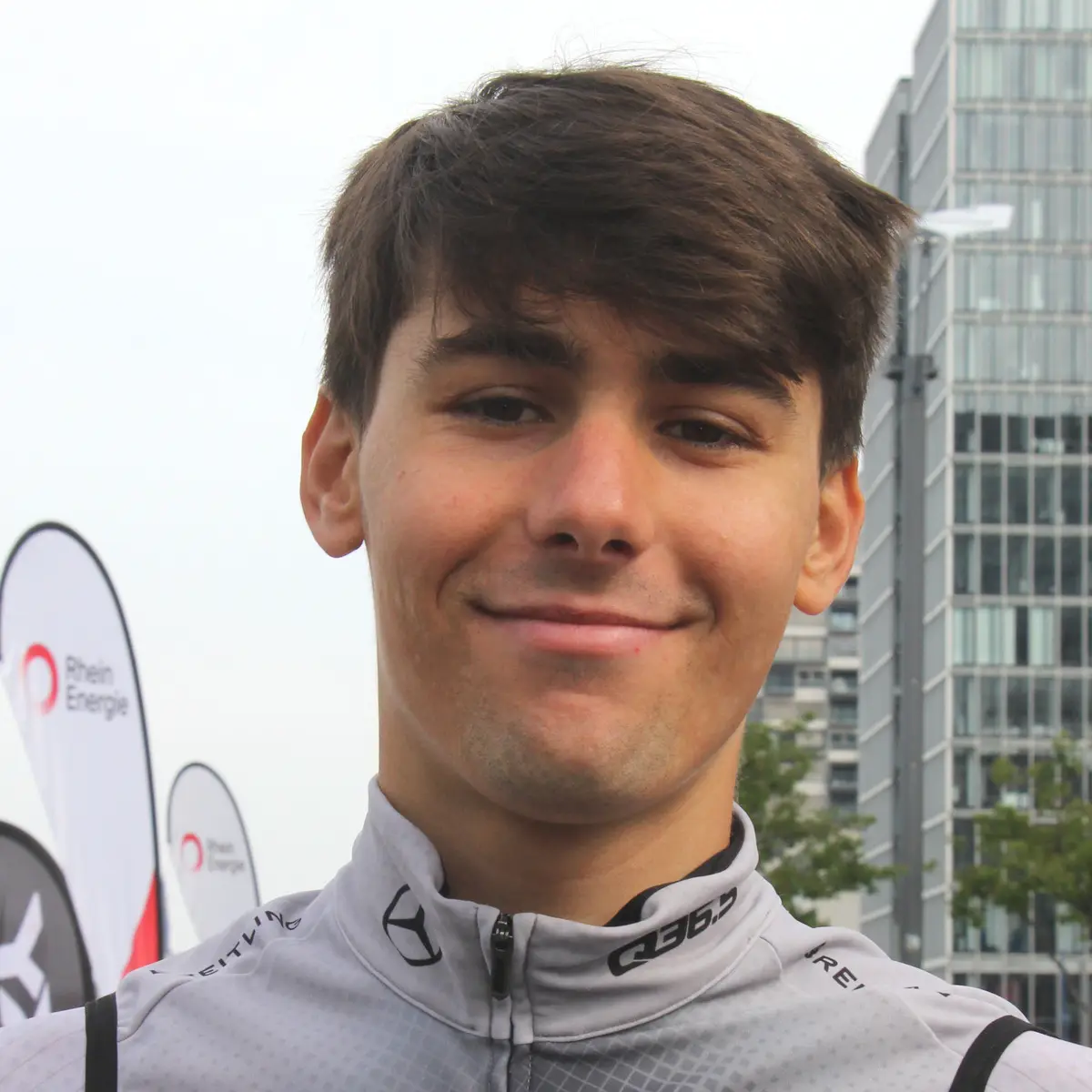
The incident involved Britain’s Thomas Gloag and Spain’s Marcel Camprubí with six laps of the finishing circuit remaining in Varese, according to the BBC. Both riders were knocked from their bikes after the motorcyclist was reported to have been travelling in the wrong direction on the course.
Gloag abandoned and needed stitches to his knee. Camprubí was able to continue, although the Guardian reported that he finished last. Pidcock said Camprubí was OK and that Gloag stopped with stitches to his knee; the Guardian described Gloag as pretty shocked after he was treated at the scene in an ambulance.
Pidcock recovered to reach the podium, with Belgium’s Jarno Widar winning the race in a sprint finish. Pidcock said incidents of this kind should not happen, and Camprubí subsequently shared an image of his damaged bike alongside concerns about the risks riders face while racing.
BBC reported that Camprubí later posted an image of his broken bike and said that riders should not have to risk their lives to race. Pidcock replied that such accidents had to stop, reinforcing the concern he expressed after the finish. The riders’ responses came after the immediate sporting consequence for the team: Gloag was unable to continue, while Camprubí completed the race and Pidcock remained in contention for the finish.
How the collision unfolded
The Guardian, citing team sources, reported that the police motorcyclist had been ahead of the riders, entered a roundabout and then circled back into the path of the advancing peloton. That account is attributed to team sources rather than to organisers or police.
The reported sequence helps explain why Pidcock’s reaction centred on the two riders’ role in his race. He said his first instinct was to stop because the men riding in front of him for his benefit had been brought down. He later said he was pleased that the team had returned to the race and that he could take a podium place.
The motorcyclist was reported to have been part of the race convoy. That distinguishes this incident from cases in which members of the public or other non-race vehicles have entered a course, even though both types of event raise safety concerns for riders. The Guardian reported that vehicles operating within a race are subject to safety and road-position rules, while the BBC said it had contacted race organisers and local police for comment.
For Pidcock, the confirmed sporting picture was unusually compressed. The collision came with six laps left; Gloag then abandoned, Camprubí continued, and Pidcock finished second behind Widar. That chronology does not establish how the crash altered the result, but it shows that Pidcock completed the race after losing one team-mate and after another had been involved in the same incident.
Safety concerns remain in focus
The reports placed the crash in the context of the death of British cyclist Finlay Tarling during the Volta a Portugal in August. The BBC reported that Tarling, 19, died on 14 August after a high-speed collision with a van that had strayed on to the closed road. It also reported that Pidcock dedicated his second cross-country world title, won in August, to Tarling.
Tarling’s case and the Tre Valli Varesine collision should not be treated as the same incident or as involving the same kind of vehicle. The van in the Volta a Portugal case was reported to have strayed on to a closed road, whereas the Guardian reported that the police rider at Tre Valli Varesine was within the race convoy. The Guardian said the Volta a Portugal incident remained under police investigation.
The Guardian also reported recent near-misses involving non-race traffic. At the Sauerlandrundfahrt in Germany, vehicles were reported to have entered closed roads twice and nearly hit riders. At the Tour of Britain Women, Australian rider Maeve Plouffe said she encountered general traffic while racing behind the peloton and was nearly hit by a car at a roundabout.
Those examples provide wider context for the concern expressed by Pidcock and Camprubí, but the available reports draw an important distinction: the Tre Valli Varesine collision was reported to involve a police motorcyclist attached to the convoy, not a vehicle entering from outside the event. For Pinarello-Q36.5, the immediate confirmed effects were Gloag’s abandonment and knee treatment, Camprubí’s completion of the race, and Pidcock’s second place despite saying he had considered stopping.