
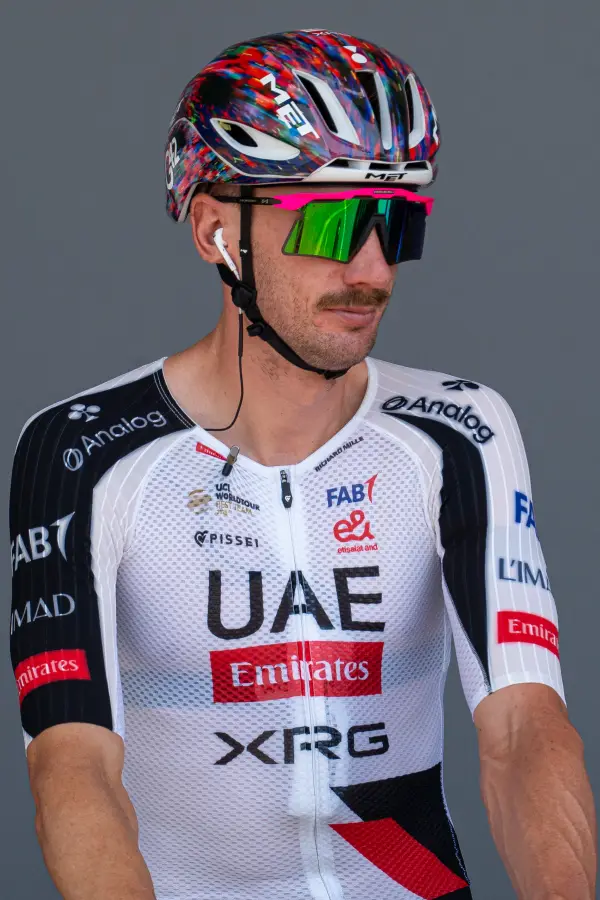
Brandon McNulty won the elite men’s road race at the UCI Road World Championships in Montreal on 27 September, becoming the first American to take the title since 1993. The 28-year-old reached the finish alone after attacking with just over 30km of the 273.4km race remaining, holding off a rapidly closing group to claim the rainbow jersey.
McNulty finished 13 seconds ahead of Australia’s Michael Matthews, who took silver in the sprint for second place. Mathieu van der Poel of the Netherlands secured bronze. Great Britain’s Tom Pidcock finished seventh after repeatedly featuring in the decisive final phase, while his team-mate Oscar Onley had also been part of an earlier select move.
The result gave the United States its first elite men’s road-race world championship since Lance Armstrong won in Oslo in 1993. McNulty completed the course in six hours and 17 minutes, according to the BBC.
McNulty survives late chase after solo move
The race remained open deep into its hilly Montreal circuit, with repeated attacks and regroupings preventing a settled contest for much of the closing stages. McNulty made his decisive move after the race came back together, with specialist outlet Escape Collective reporting that he attacked just over 30km from the line.
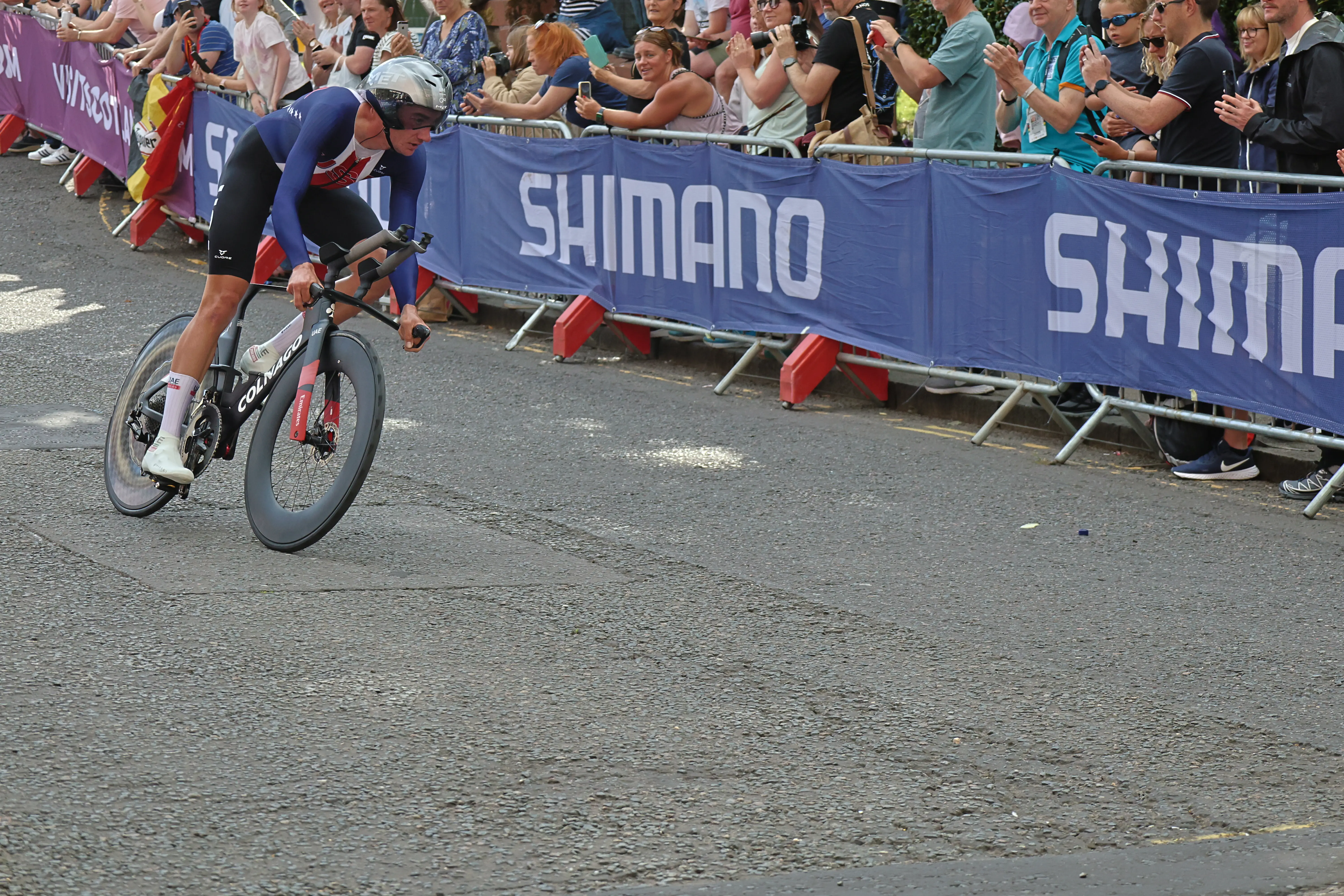
He began the final lap with a 50-second advantage, but the margin did not guarantee victory. The BBC reported that McNulty visibly tired on the final climb and saw his lead fall to 10 seconds as the pursuers pressed on. The Guardian said Pidcock made a late attempt to reduce the American’s advantage, at one stage cutting it to only a handful of seconds.
McNulty later said he had been exhausted and had not been certain of victory until very late in the run-in. His ability to maintain enough of a cushion nevertheless proved decisive, leaving Matthews and Van der Poel to contest the remaining podium places.
Matthews’ second place followed a sprint from the chasing group. Van der Poel, a former world champion, completed the podium in third, while Belgium’s Remco Evenepoel was 12th.
American numbers shape the decisive phase
McNulty’s solo effort was supported by a United States team plan built around retaining several contenders in the front of the race. Cycling Weekly reported that team director Michael Creed had instructed his riders to maintain more than 10 per cent of the lead group, giving the team options as the race fragmented.
Quinn Simmons had joined a key earlier move, while Matteo Jorgenson and Simmons were then able to respond to moves behind McNulty rather than contribute to a sustained chase. McNulty said their work ensured the group behind was repeatedly accelerating and slowing, a pattern he believed benefited the lone rider ahead.
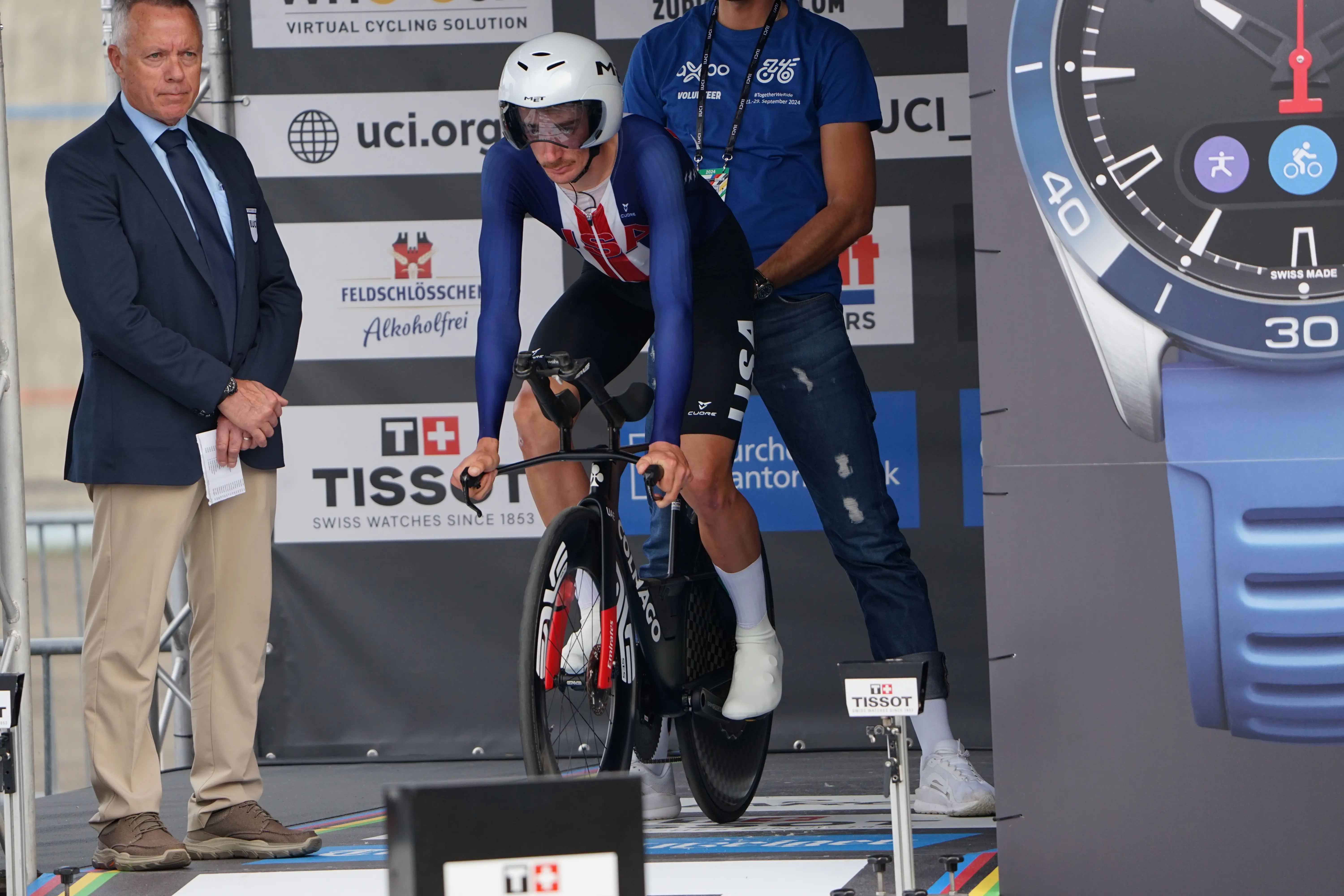
The American team’s depth was also reflected in the final classification: Simmons finished fourth and Jorgenson eighth, according to Cycling Weekly. That strength did not remove the uncertainty of McNulty’s final lap, but it limited the ability of rivals to organise a consistent pursuit.
Pidcock and Onley give Britain a presence
For Britain, Pidcock was among the most active riders in the final hour. The Guardian described him as one of the race’s principal animators, and his late chase briefly raised the prospect of catching McNulty. Seventh place left him outside the medal positions, but his involvement underlined that he remained in contention during a finale shaped by continual attacks rather than a conventional bunch sprint.
Onley had featured earlier when a group of around 12 riders went clear with 90km remaining. That selection was later reduced, and Escape Collective reported that Onley rode in a six-rider lead group alongside Van der Poel, Wout van Aert, Primoz Roglic, Anthon Charmig and Simmons. He was eventually distanced by renewed accelerations from Van der Poel.
McNulty’s victory ultimately came from timing, resilience and the tactical cover provided by his team-mates. For Pidcock and Britain, the race offered a meaningful presence in the decisive action, even though the rainbow jersey went to the United States.