
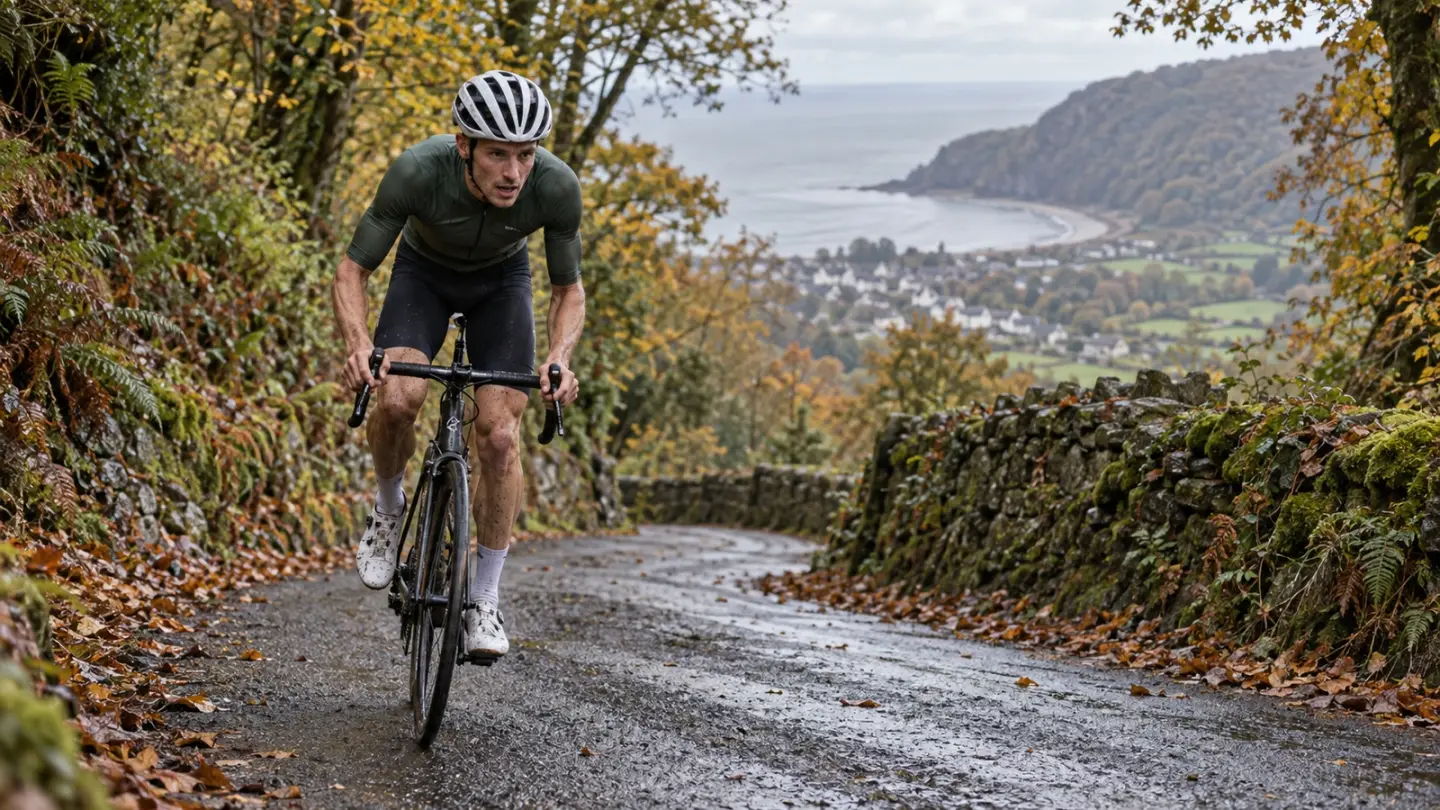
Reigning men’s champion Andrew Feather has made substantial changes to his riding position as he prepares to defend his title at the British National Hill-Climb Championships on Porlock Hill in Somerset on Sunday 25 October.
The HuntBikeWheels rider told Cycling Weekly that this year’s course had required a different approach. Rather than the short and steep ascents often associated with the championship, competitors will climb the Porlock Hill toll road over a reported 4.2 miles at an average gradient of 5.5%.
That profile has prompted Feather to concentrate on a more aerodynamic set-up for a climb he described to Cycling Weekly as shallow and fast. The route will use the toll road, which runs roughly parallel to Porlock’s considerably steeper main-road ascent.
Feather changes position for longer test
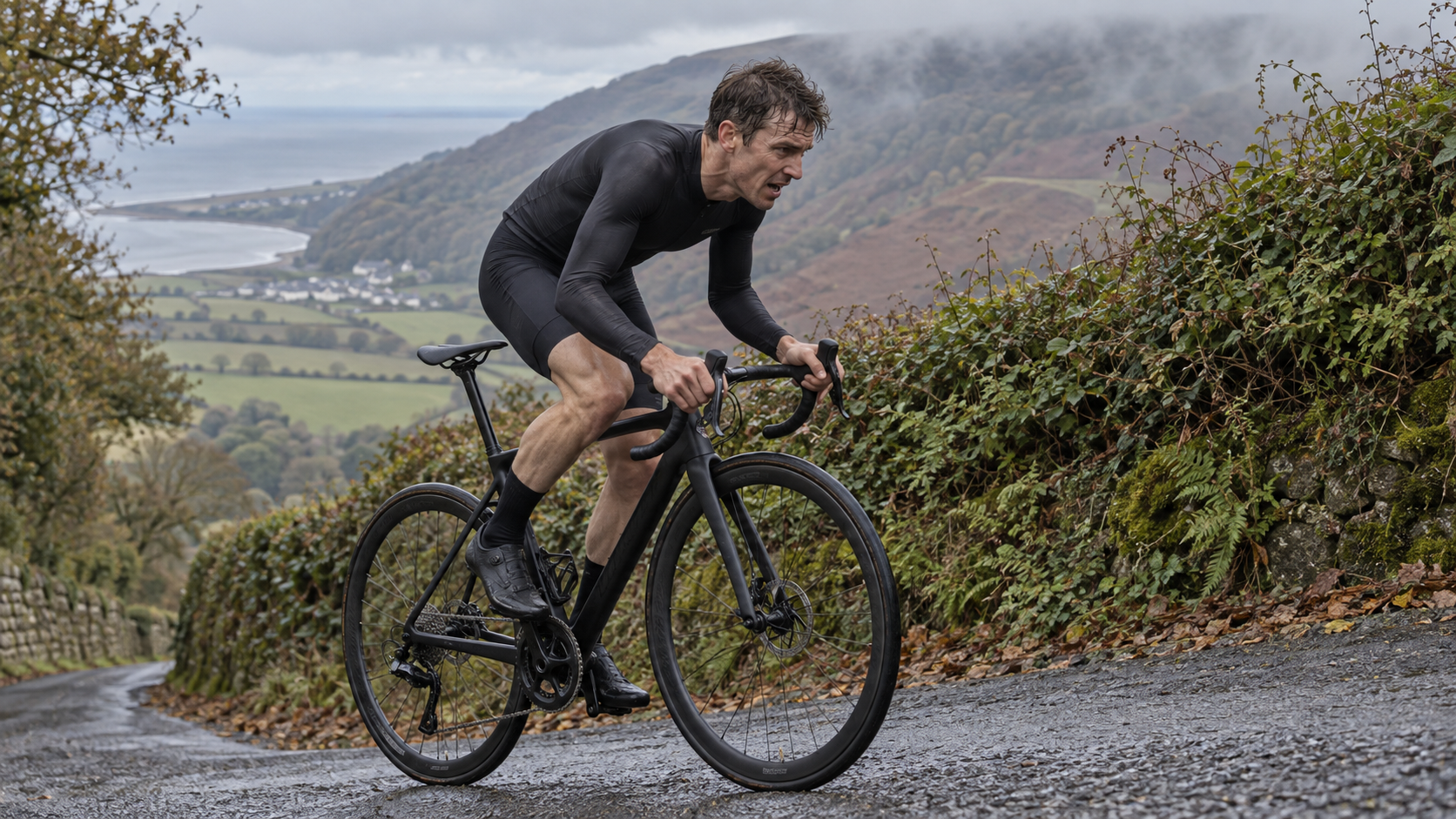
According to Cycling Weekly, Feather has extended his reach by six centimetres, lowered the front end of his bike by five centimetres and reduced his handlebar width from 42cm to 32cm. He said he had made the adjustments early in the year to improve a position that had previously left him upright and exposed to the wind on faster climbs.
Feather has also been riding hill-climbs in the drops rather than in the upright, out-of-the-saddle position he said he had previously used. The rider said the championship course had driven the change because it should place a greater premium on maintaining speed over a sustained distance.
Cycling Weekly reported that Feather had won all six hill-climbs he had entered this season. His results included victory in the three-mile Nebo Road Hill-Climb in Wales and the 4.5-mile Great Dunn Fell event, which the report said had a gradient comparable with Porlock Hill.
Those performances provide encouraging evidence for Feather’s revised approach, although he made clear that the national championship remains the objective that matters most. Winning earlier events, he suggested, would not compensate for missing out at Porlock.
The course itself creates a different competitive problem from a brief, very steep effort. Its official average gradient may appear manageable on paper, but the length means riders will still have to sustain their output for considerably longer than on many hill-climb championship courses. Feather’s changes are therefore a practical response to the specific demands reported for the Somerset route, rather than a guarantee of the result.
Gardner welcomes longer course
Illi Gardner, the three-time former national hill-climb champion who took silver last year for Cardiff Ajax CC, told Cycling Weekly that she was excited by the longer distance. She had already ridden the route in preparation.
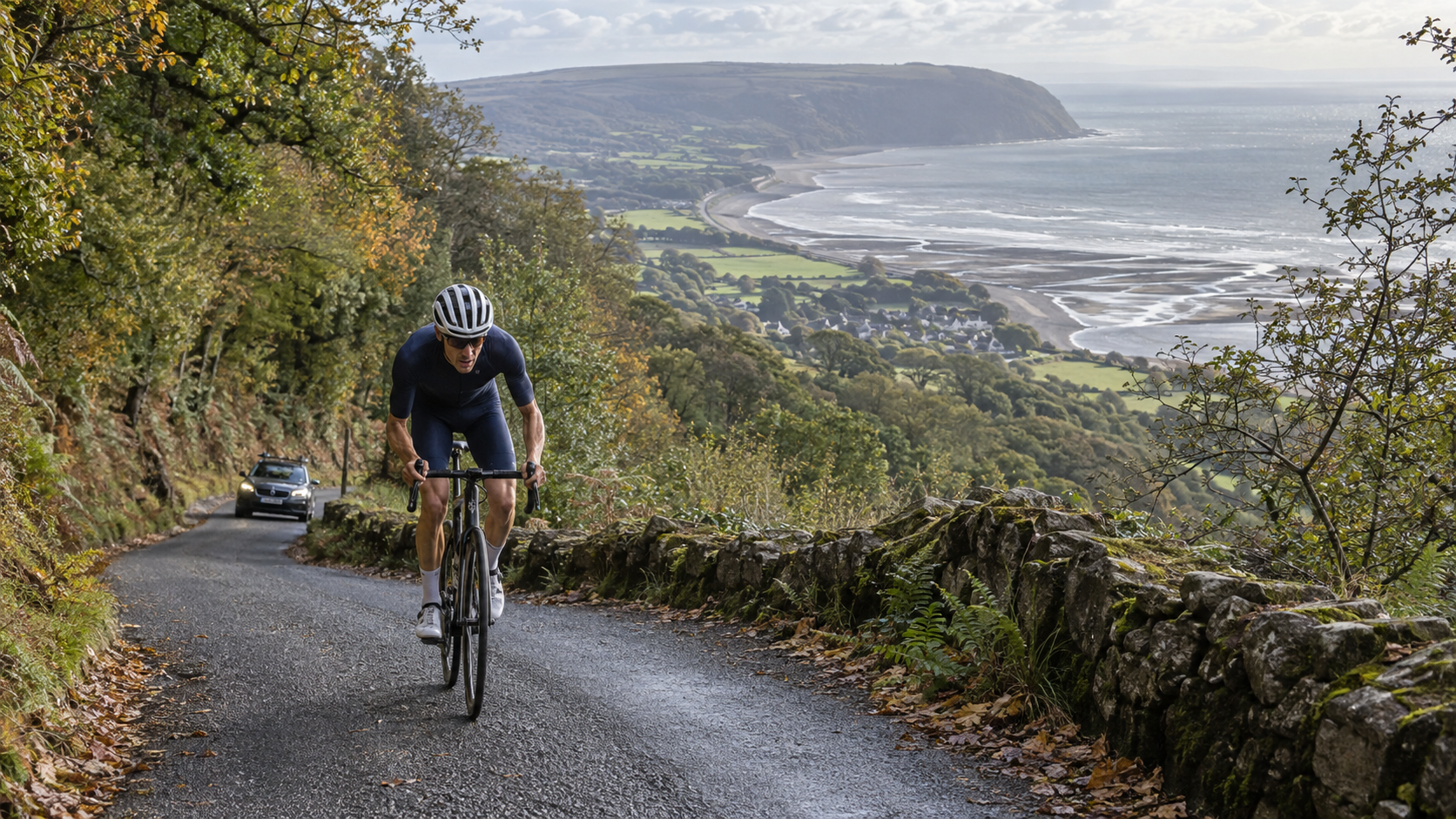
Gardner said the exposed top section could make wind an important consideration. Unlike Feather, she said she had not made major changes to her general approach this year and had not previously focused heavily on equipment or aerodynamics. She nevertheless acknowledged that wearing a skinsuit could avoid giving away unnecessary seconds.
Her immediate programme includes the Everesting Championships in Sicily, where she is due to defend her title. Cycling Weekly reported that Gardner had prepared in part through two Everesting Roam rides of around 200 miles, in which the same hill is not climbed twice. After the Sicilian event, she said she would turn her attention back to shorter hill-climb races and compete several more times before the national championship.
The contrast between the two riders’ preparations underlines why Porlock Hill is likely to be an unusual edition of the championship. Feather has tailored his set-up towards speed and a lower profile for the shallower gradient, while Gardner has retained her established method but identified the wind as a variable. Both approaches will be tested on a route whose distance and profile depart from the discipline’s more familiar short, sharp format.
For Feather, the task is straightforward: translate a six-race winning run and a year of positional changes into a successful title defence. For the rest of the field, Porlock’s longer toll-road ascent offers a championship course where sustained pace may be as significant as the explosive climbing normally associated with the event.