
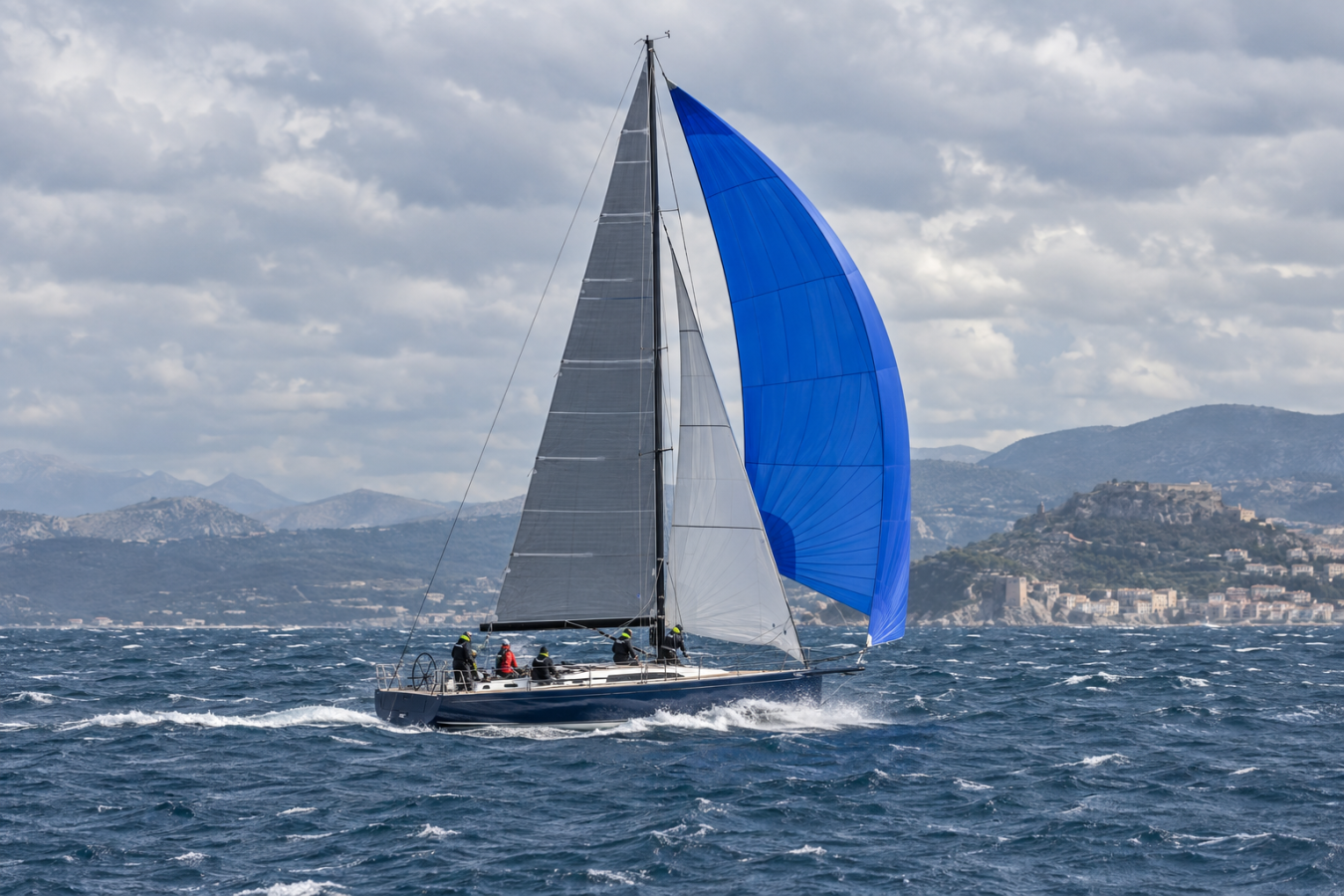
Cyclops Marine said data from the Rimar 45RS Bloom ruled out operational overload as the sole contributing factor in its dismasting during the 2026 Brindisi-Corfu International Regatta.
Cyclops Marine, which published the analysis of a Cyclops backstay sensor, said its records showed a backstay load of about 1,600kg immediately before the mast fell. The company compared that reading with a stated working-load limit of nine tonnes for the backstay system, and said load peaks across the race had remained substantially below that limit.
Cyclops Marine’s analysis does not establish a final cause for the structural failure. However, it said the sensor record, video and crew accounts meant operational overload could be ruled out as the sole contributing factor. Cyclops Marine discussed possible contributing factors but did not identify an established cause.
Recorded conditions did not indicate an extreme event
According to Cyclops Marine’s report, Bloom had sailed about 70 nautical miles from the start when it dismasted. The reported maximum true wind speed was approximately 25 knots, while the yacht’s top recorded speed was about 15 knots.
The boat was broad-reaching with its mainsail, A2 gennaker and staysail set, Cyclops Marine said. It described waves as arriving from the quarter and reported that the vessel remained under control, with moderate heel, a stable helm and balanced trim.
The company said four crew members were actively sailing the yacht at the time, while four were positioned on the windward guardrail and two were below deck. The crew reported hearing a bang before the mast fell to leeward, according to the account.
Cyclops Marine said there had been no reported warning signs of instability or mast pumping. Its report also said video showed the backstay system remaining stable, while the recorded load trace did not show cyclical variations that might indicate pumping. Crew members were said to have reported no pumping during the race or in earlier seasons.
What the sensor data can and cannot show
The key comparison in the report is between the approximately 1,600kg backstay reading at the point of failure and the nine-tonne working-load limit cited by Cyclops Marine. On that basis, the company said the rig had been operating within the stated margins in the conditions recorded.
That is significant because it provides a measured account of one part of the rig’s loading, rather than relying only on impressions of wind strength, sea state or crew handling. Cyclops Marine said the continuous record helped investigators reconstruct the sequence before the dismasting and assess operational parameters alongside the rig’s behaviour.
The report describes the measurement as a backstay load and says further investigation is focused on possible interactions within the rig assembly. Cyclops Marine discussed material fatigue, local stress concentrations and component specification limits as possible areas for further investigation, rather than naming an established cause.
Monitoring planned on replacement rig
Cyclops Marine said the replacement carbon-fibre mast would include an integrated mast jack for compression management and additional Cyclops Smarttune sensors on the cap shrouds. It said this arrangement would allow continuous monitoring of standing-rigging loads and force distribution across more of the rig.
For offshore racing, the episode illustrates the value of recorded load data in separating a visible failure from assumptions about its cause. In Bloom’s case, the available evidence supports a narrower conclusion: Cyclops Marine’s data challenges overload as the sole explanation, but does not yet determine why the mast failed.