
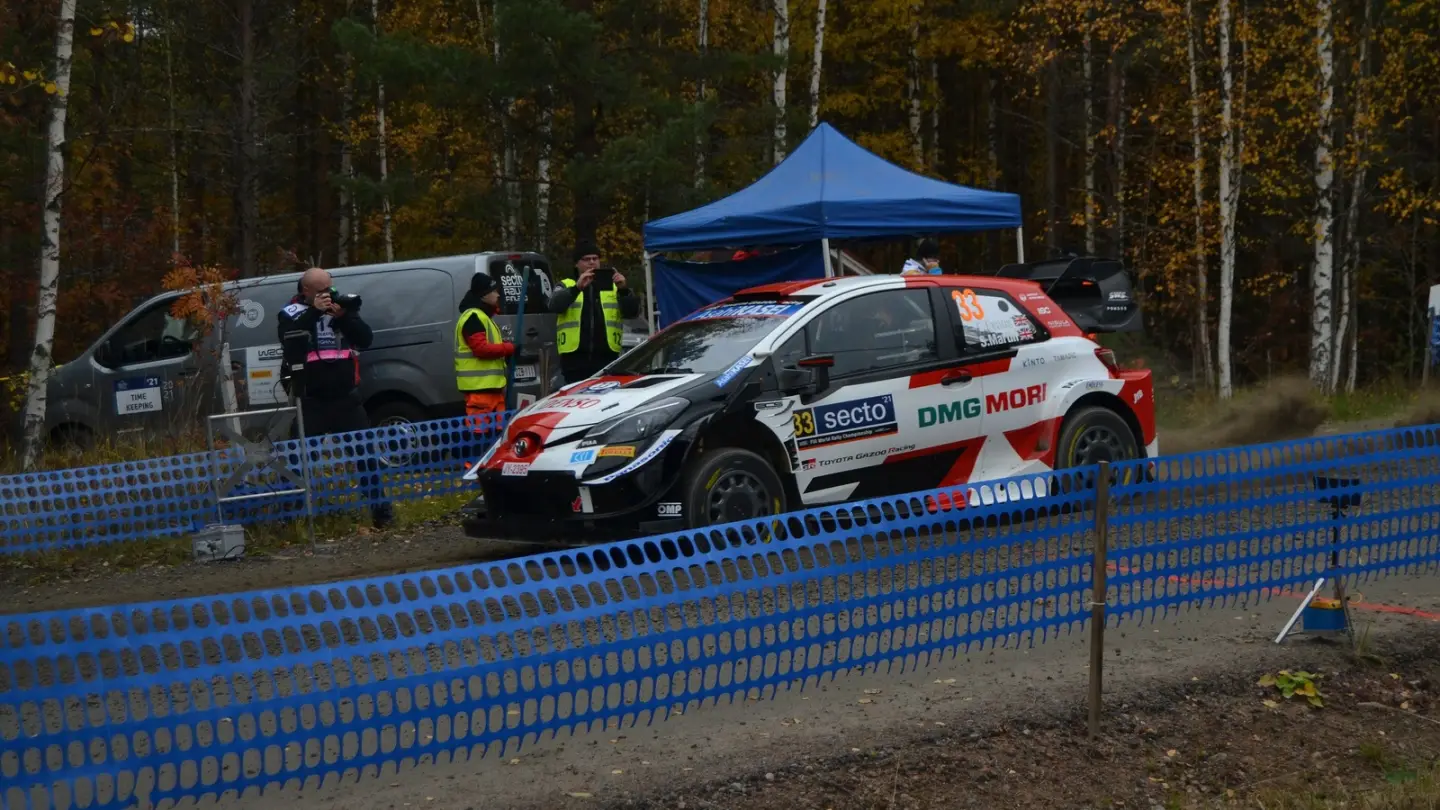
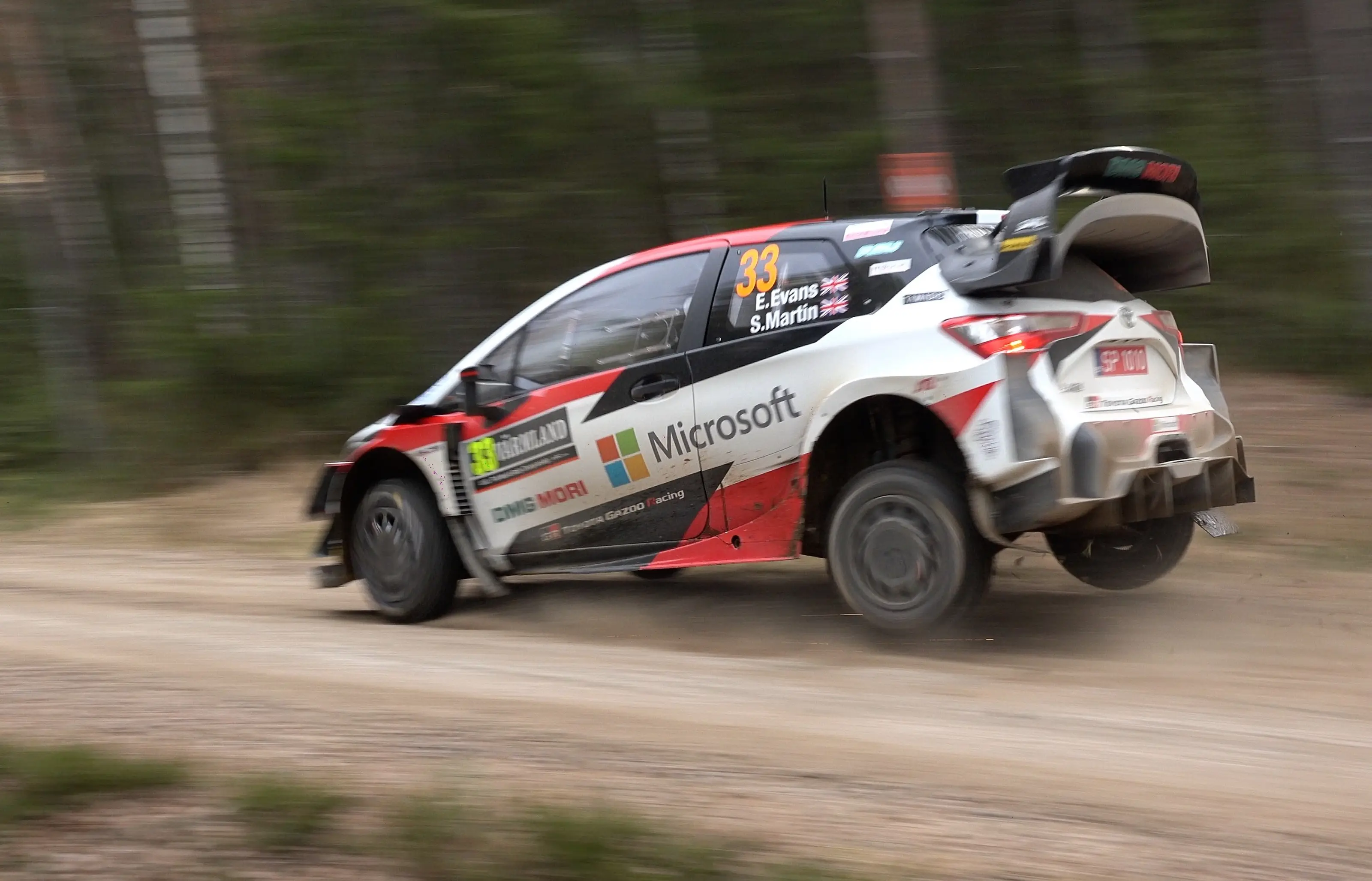
Elfyn Evans has won his first World Rally Championship title after a dramatic final stage at Rally Italia Sardegna, becoming the first British champion in the series for 25 years.
The Welsh Toyota driver secured the crown when team-mate Oliver Solberg crashed just two corners from the finish of the final stage. Solberg had been on course to overturn Evans’ championship advantage through the final-stage bonus points, but his late error left Evans champion by five points.
Evans completed the rally fifth, while Solberg recovered to finish ninth seconds slower than his title rival on the decisive stage. Solberg nevertheless won the rally by almost a minute from Sébastien Ogier, with Sami Pajari third. The result left Evans on 243 points, Solberg on 238 and Pajari on 237 at the end of the 2026 season, according to the BBC.
It is a title shaped as much by Evans’ season-long consistency as by an extraordinary final twist. He and co-driver Scott Martin arrived in Sardinia with a 21-point lead, but that margin had narrowed to one point before the 17th and final stage. Solberg needed only to beat Evans on that test to collect enough bonus points to become champion.
Instead, with fewer than a kilometre remaining, Solberg lost control and went off the road into sand. The Swede and his English co-driver Elliott Edmondson returned to the road, but the lost time ended their title challenge and delivered the championship to Evans and Martin.
A long-awaited breakthrough for Evans
The success ends a sequence of painful near-misses for Evans, who had previously been WRC runner-up five times. The BBC reported that three of those second places had been decided on the final day of a season, including campaigns in which he had led going into the concluding rally.
Evans, 37, said the manner of the victory had not immediately sunk in and acknowledged Solberg’s strength across the Sardinian weekend. He said he had believed the championship was gone before the final-stage incident, while adding that it was a relief to complete the job.
Martin said he and Evans had maintained throughout the week that the title fight would remain open until they had reached the end of the final stage. Their patience proved decisive after a difficult weekend in which road position affected Evans’ pace, according to the BBC.
The outcome also underlines the value of the points buffer Evans built before Sardinia. Although the final rally did not go entirely to plan for the Toyota pair, their advantage entering the event meant Solberg had to pursue a high-risk route to the title. That calculation intensified once the lead had been cut to a single point ahead of the final test.
Third British male WRC champion
Evans is only the third British man to win the WRC drivers’ title since the championship began in 1977. He follows Colin McRae, champion in 1995, and Richard Burns, who won in 2001. The BBC said Louise Aitken-Walker had earlier become Britain’s first world rally champion when the WRC operated a women’s championship in 1990.
For British rallying, Evans’ achievement ends the wait since Burns’ title 25 years ago. It also changes the context of a career repeatedly defined by narrow losses. Evans had taken a 21-point lead into the final event after a season in which he and Martin had been consistent across varied rallies, despite winning only two of the preceding 12 events, the BBC reported.
Solberg’s disappointment was especially stark because he had pushed hard enough to put the championship within reach. The 25-year-old said he had known he was taking risks on the final stage and had tried to save the car after the error. Evans, who said he understood the difficulty of losing a title so late, described Solberg as a driver with a strong future.
The final standings showed how little separated Toyota’s leading contenders: Pajari finished only one point behind Solberg in third. But the championship belongs to Evans and Martin, whose season ended with the prize they had pursued through a tense final round in Sardinia.