
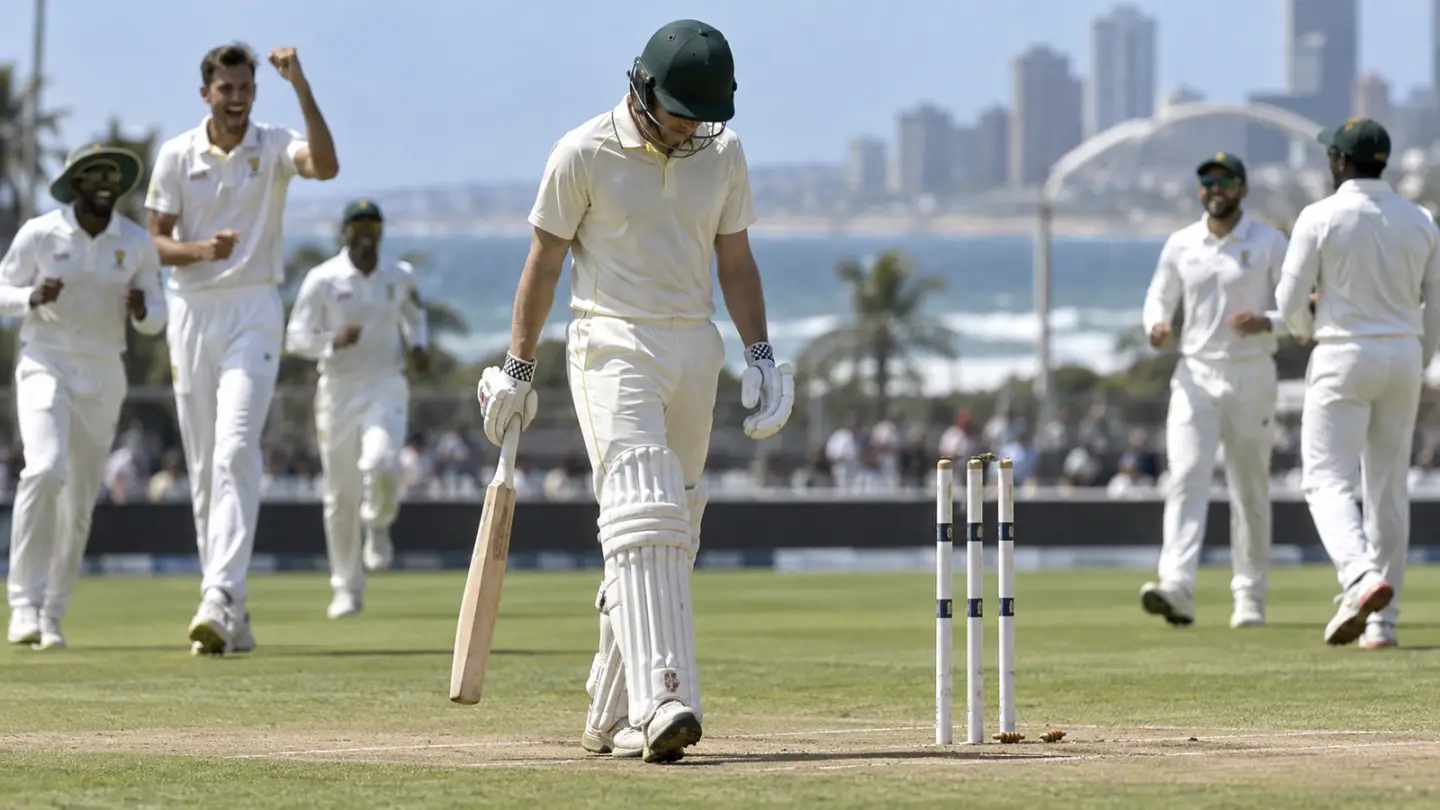
Nic Maddinson’s return to Test cricket ended with a 33-ball duck against South Africa in Durban on the opening day of the first Test, giving the Australia opener an unwanted national record after almost 10 years away from the format. The 34-year-old was bowled by Marco Jansen after attempting a cut shot, and his scoreless innings became the longest by an Australian opening batter in Test history.
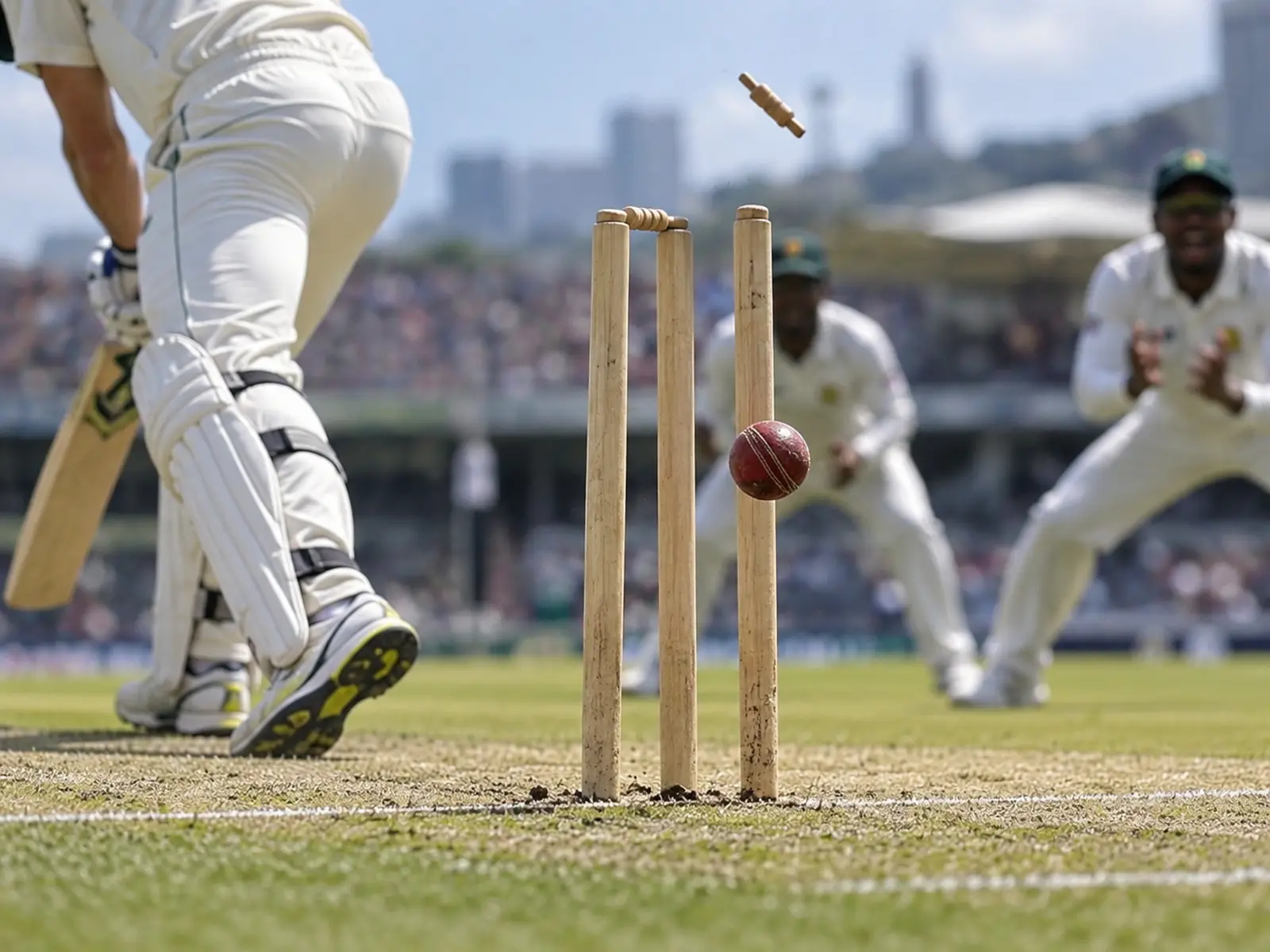
Maddinson faced 33 deliveries without scoring before Jansen’s ball crashed into the stumps in the 11th over. The BBC reported that it was the third-longest duck by any opener in men’s Tests, while Wisden identified Trevor Gripper’s 36-ball effort and Darrin Murray’s 39-ball innings as the only longer scoreless stays at the top of the order.
The innings was an abrupt outcome for a player whose selection had carried an unusual personal and cricketing backdrop. Maddinson had last played a Test in December 2016, having made three appearances for Australia, and returned to cricket only around 12 months ago after treatment for testicular cancer that had spread to his lung and lymph nodes.
Australia’s choice to recall him had already prompted debate because his first-class absence extended back to March 2025. According to the BBC, his domestic appearances since then had been in white-ball cricket. Maddinson was called up after Josh Inglis was ruled out of the series opener with a finger injury.
A difficult start in a struggling innings
Maddinson was not Australia’s only batting casualty on a difficult opening day. By the midpoint of the day, the tourists were 127-6, with Matt Renshaw the only specialist batter still in the innings. Steve Smith, Travis Head, Marnus Labuschagne, Alex Carey and Beau Webster had all been dismissed.
The scoreline gives important context to Maddinson’s duck. His 33 balls occupied more than five overs, so the innings was not a single-delivery dismissal or a brief attempt to force the pace. The BBC reported that he missed 13 deliveries and edged one before his eventual dismissal. It also said South Africa could have removed him earlier had they reviewed an lbw appeal on the 15th ball he faced.
That does not establish that the recall was mistaken. It does, however, underline how immediately a selection made partly for batting flexibility was tested in conditions where Australia’s top order struggled collectively. Wisden reported that chief selector George Bailey had presented Maddinson as a player capable of batting in different positions, describing that flexibility as significant amid the team’s changing personnel.
Opening uncertainty sharpens the focus
The record duck has received added attention because Australia have repeatedly changed their opening combination. Wisden reported that the pairing of Travis Head and Maddinson was Australia’s seventh different opening partnership since the start of 2025, excluding Scott Boland’s one-off stint as opener in the 2025-26 Ashes.
Since Usman Khawaja’s retirement, Australia have tried four openers besides Head and Boland, according to Wisden. Jake Weatherald had the longest run, playing six matches and scoring 219 runs at an average of 21.9. Renshaw and Labuschagne had each opened once, while Maddinson’s Durban innings was his opening appearance.
The wider selection picture was also notable. The BBC said Australia named an entire XI aged over 30 for the first time in their Test history, while Maddinson and Renshaw were the newer names in an experienced batting group. Maddinson’s return was therefore both an opportunity for an individual recovering his international career and part of a broader attempt to settle a changing side.
For now, the clearest fact is the one in the scorecard: a 33-ball duck. It is a record Maddinson would not have wanted, but the length of the innings and the instability around Australia’s opening role explain why it became a prominent early moment of the Durban Test rather than simply another low score.