
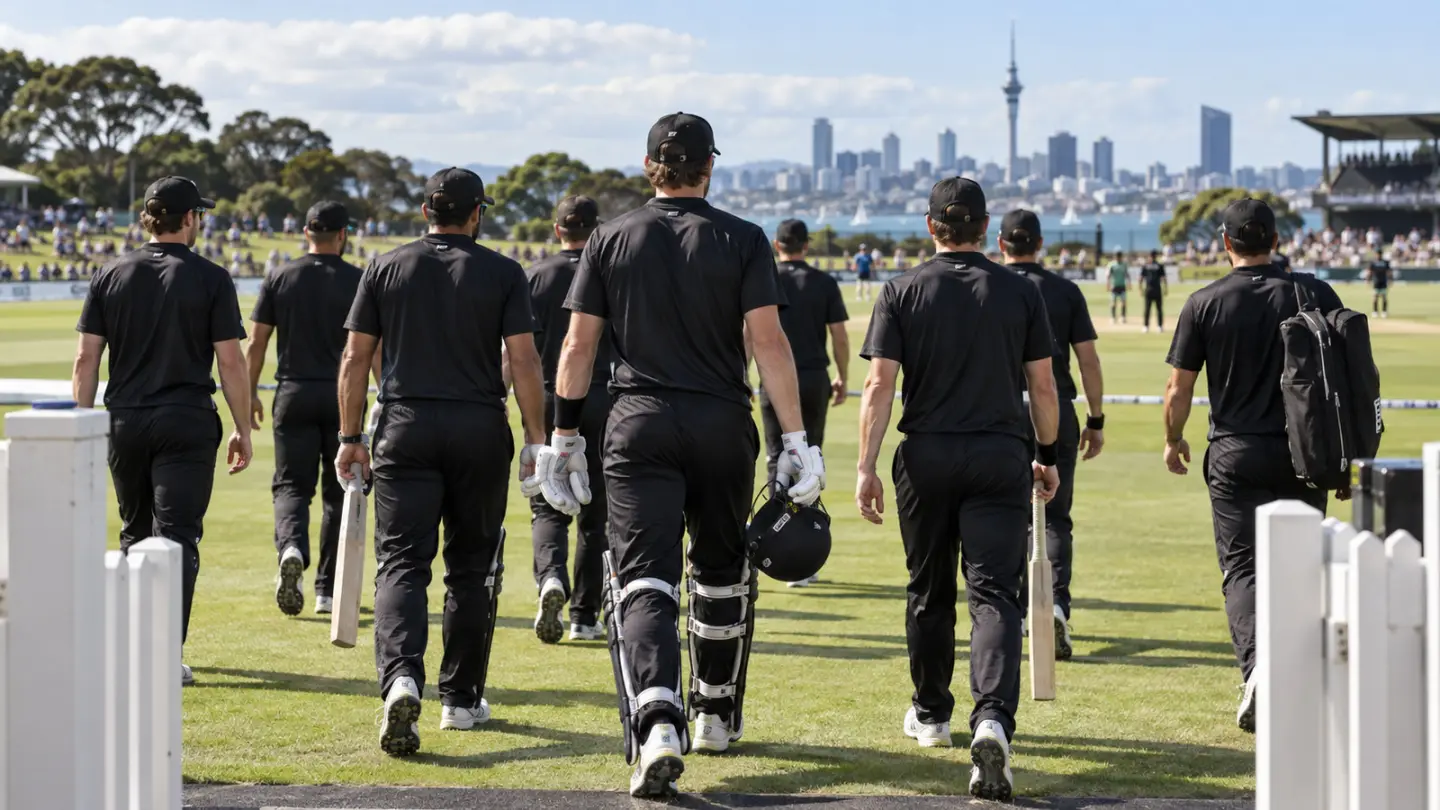
New Zealand have named separate squads for the opening three and final two one-day internationals against India, with Mitchell Santner set to captain both groups in a selection plan designed to balance World Cup preparation with the following Test series. The five-match home ODI series starts in Auckland on 4 November, and seven players will join the group for the last two matches.
The change means the players selected for the first three ODIs who are required for red-ball cricket will leave after the Hamilton match on 10 November. New Zealand head coach Rob Walter said the move would give those players additional time to prepare for the first Test against India at Wellington’s Basin Reserve, scheduled to begin on 19 November.
Walter said the approach would support preparation for the 2027 ICC Men’s Cricket World Cup while maintaining focused preparation for a Test series that carries World Test Championship points. The final ODI is at Mount Maunganui on 15 November, four days before the first Test begins.
A planned switch after the third ODI
Santner, New Zealand’s white-ball captain, is retained across both squads. Michael Bracewell, Mark Chapman, Jacob Duffy, Blair Tickner and Will Young are also included for all five matches, giving the side continuity despite the wider changes.

The first group contains Devon Conway, Matt Henry, Kyle Jamieson, Tom Latham, Daryl Mitchell, Glenn Phillips, Rachin Ravindra and Nathan Smith, alongside Santner and the five players retained throughout. For the fourth and fifth ODIs, Finn Allen, Kristian Clarke, Matt Fisher, Lockie Ferguson, Mitch Hay, Nick Kelly and Tim Seifert come into the squad.
That is a substantial reset rather than a single replacement. The second squad contains 13 players, with six retained from the opening group and seven players added for the final two ODIs. New Zealand said its red-ball players will leave after the third ODI to prepare for the first Test, while the final two ODIs offer an opportunity to assess alternatives against India in competitive 50-over cricket.
| ODI phase | Dates and venues | Squad change |
|---|---|---|
| First three matches | 4 November, Auckland; 7 November, Wellington; 10 November, Hamilton | Ravindra, Conway, Henry, Jamieson, Latham, Daryl Mitchell, Phillips and Smith are selected. |
| Final two matches | 13 and 15 November, Mount Maunganui | Allen, Clarke, Fisher, Ferguson, Hay, Kelly and Seifert join the group. |
Walter said the change would test depth against a world-class side and give red-ball players additional preparation before the first Test.
Ravindra returns, while three players remain unavailable
Ravindra has been selected for the first three ODIs after a shoulder injury ruled him out of the preceding T20 international series against India. His inclusion gives New Zealand an immediate returnee in the earlier phase of the 50-over programme.
Allen, Ferguson and Seifert are instead scheduled to appear in the final-two-ODIs group. The ICC report said Allen and Ferguson last played an ODI during the 2023 World Cup, while Seifert’s previous ODI appearance came 18 months ago against Pakistan.
Zak Foulkes, Will O’Rourke and Ben Sears were unavailable while continuing injury rehabilitation. Fisher is among the seven players selected for the final two ODIs.
The ODI plan sits in the middle of a longer India visit. The teams are scheduled to play five T20 internationals from 22 October to 1 November, followed by the ODIs, before Tests in Wellington from 19 November and Christchurch from 27 November. Red-ball players leaving after the 10 November ODI have eight full intervening days before the Test starts on 19 November; players retained for the final-two-ODIs squad continue the white-ball series.
For supporters, the immediate practical point is that the personnel on show in Auckland, Wellington and Hamilton will not be identical to those at Mount Maunganui. Santner’s continued captaincy and the retention of six players across both groups provide a stable core, but New Zealand have made clear that the series will also serve as an active selection test ahead of two major objectives.