
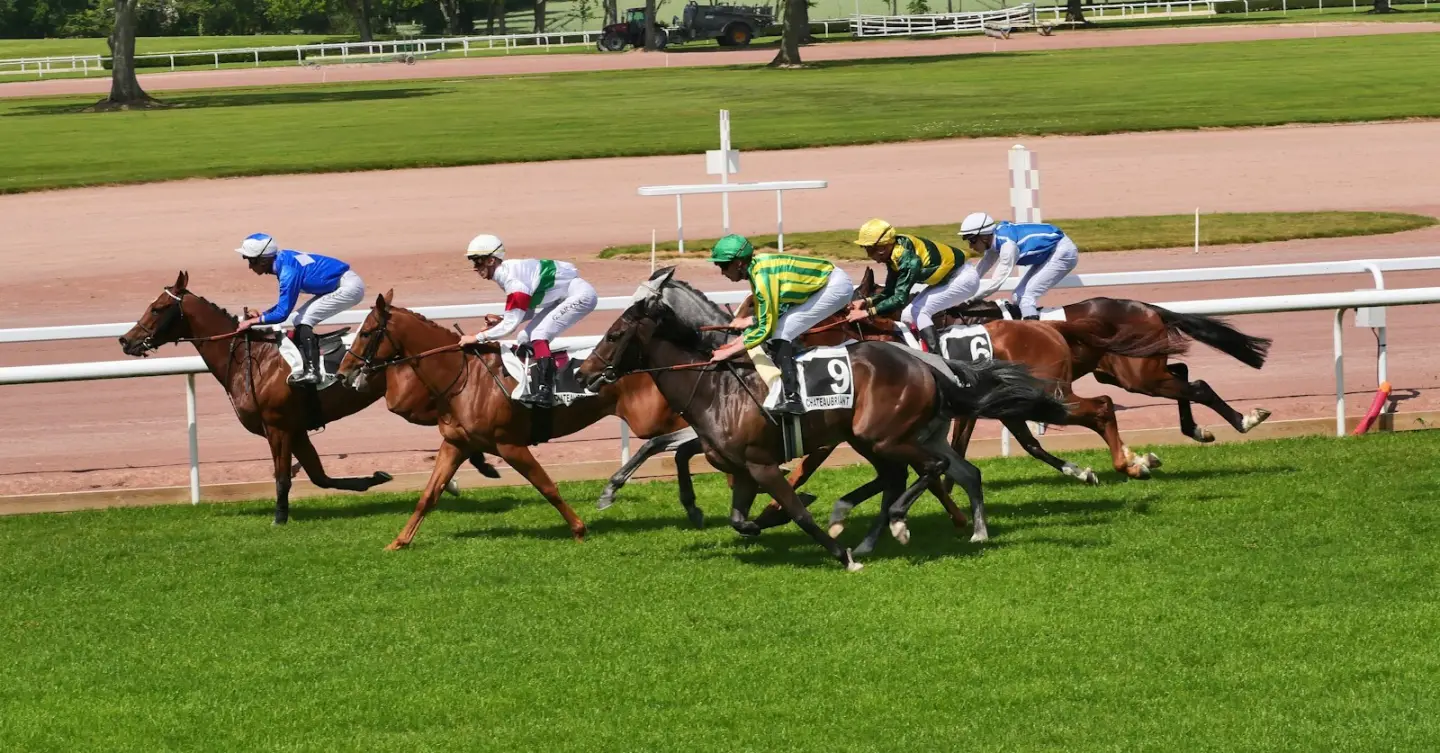
A British homebred became the first winner at the rebuilt Belmont Park at the reopening meeting on Friday, when Lisa Joy took the opening mile-and-a-quarter maiden on the inner turf course, providing an international flourish on the day the New York venue resumed racing after a three-year, $555 million reconstruction.
Owned by Andrew Rosen and trained by Hall of Fame conditioner Shug McGaughey, Lisa Joy was ridden by jockey Antonio Fresu. That a British homebred should claim the first race at a venue the New York Racing Association has been pitching as a global destination offered an unplanned early illustration of the ambition behind the project, though the more consequential tests of that ambition lie considerably further ahead.
A venue rebuilt around modern realities
Belmont Park has stood in some form on the Queens–Nassau County line since 1905, but almost nothing recognisable from the old venue survives. The cavernous grandstand that once dominated the home straight, with a footprint of roughly 1.25 million square feet, has been replaced by a five-storey, glass-fronted building of approximately 300,000 square feet — less than a quarter of the original size. The replacement has been designed around the reality that modern attendances rarely justify a structure built for crowds of many tens of thousands on ordinary afternoons.
The famous Big Sandy dirt surface, synonymous with the gruelling mile-and-a-half final leg of the Triple Crown, has also gone. In its place is a new surface carrying the same soil composition used at Saratoga, with the finish line repositioned to create a longer stretch run. NYRA has also constructed two rebuilt turf courses, a new one-mile Tapeta oval intended for year-round winter racing, a paddock 50 per cent larger than its predecessor and approximately 20 acres of newly accessible green space.
The reconstruction was financed through a $455 million state loan alongside $100 million from NYRA itself. The state funding is to be repaid from NYRA’s share of slot-machine revenue from the Resorts World casino, situated beside the now-closed Aqueduct property roughly nine miles from Belmont. At a ribbon-cutting on Friday morning, New York governor Kathy Hochul described the loan as a calculated investment, saying the aim was to create an international racing hub that could serve the wider community as a versatile venue.
The closure of Aqueduct
The $555 million project carried a significant cost beyond money. NYRA consolidated its entire downstate operation at Belmont, ending 132 years of racing at Aqueduct in Queens and leaving New York City without a thoroughbred racetrack for the first time since 1821, according to the Guardian’s account of the reopening. The Aqueduct site is being returned to the state for a planned mixed-use redevelopment incorporating housing, retail, community facilities and open space.
Pricing and the autumn calendar
The new building operates on a tiered model. General admission costs $7 in advance or $10 at the gate after opening weekend — the same rate NYRA charges at Saratoga. Box seats run between $55 and $75, while the Overlook and Stretch View areas require reservations and cost $100 to $150 more per person. The Turf Club charges $75 per person, rising to $150 for its premium menu option. Attendance was capped at 6,000 during opening weekend and will drop to 4,000 while construction on the upper floors continues; those remaining three storeys are expected to be finished early next year.
The new facility will host a 46-day autumn meet featuring 72 stakes races worth a combined $17.7 million. The Belmont Stakes is scheduled to return to the venue next year, and the Breeders’ Cup is due back at Belmont for the first time since 2005. NYRA chief executive Dave O’Rourke has indicated the organisation is considering shortening the Belmont Stakes from its traditional mile-and-a-half distance to a mile and a quarter, arguing that the historic trip no longer reflects what modern breeders are producing.
The day’s racing and wider reactions
The headline race on reopening day was the $1 million Jockey Club Gold Cup, won by the Japanese five-year-old Forever Young, who sat behind the early pace before sweeping to the lead around the far turn and winning by three and a quarter lengths to push his career earnings beyond $32 million. The stallion had won 11 of his first 15 races, including the 2025 Breeders’ Cup Classic. His trainer, Yoshito Yahagi, speaking through a translator, said he was only 50 per cent satisfied, estimating the horse at approximately 80 per cent fitness ahead of an attempt next month to become only the second horse after Tiznow to win consecutive Breeders’ Cup Classics.
McGaughey welcomed the rebuilt venue while acknowledging that work remained. The return of racing is therefore an opening stage rather than the completion of the project: upper-floor construction continues, and the autumn programme will show how the smaller facility operates beyond its first weekend. Lisa Joy’s win gives the reopening a British breeding connection, while the scheduled return of major meetings provides the next test of Belmont’s international ambitions.