
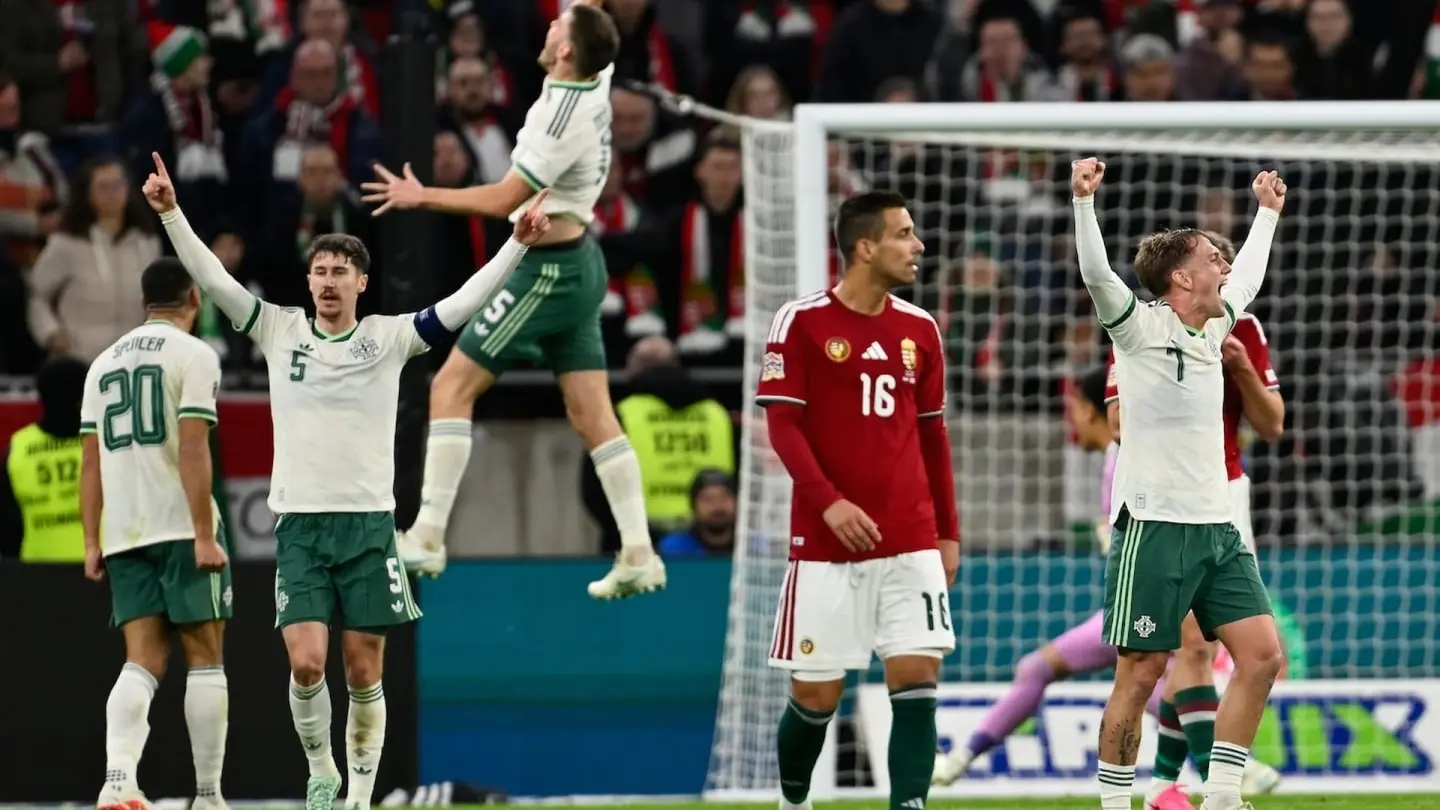
Northern Ireland arrived at the Puskas Arena with a one-point advantage over their closest rival and a clear equation: avoid defeat and the group was theirs. Hungary controlled more of the ball, but the visitors remained compact, protected the centre and waited for an opportunity to attack without exposing the spaces behind their midfield.
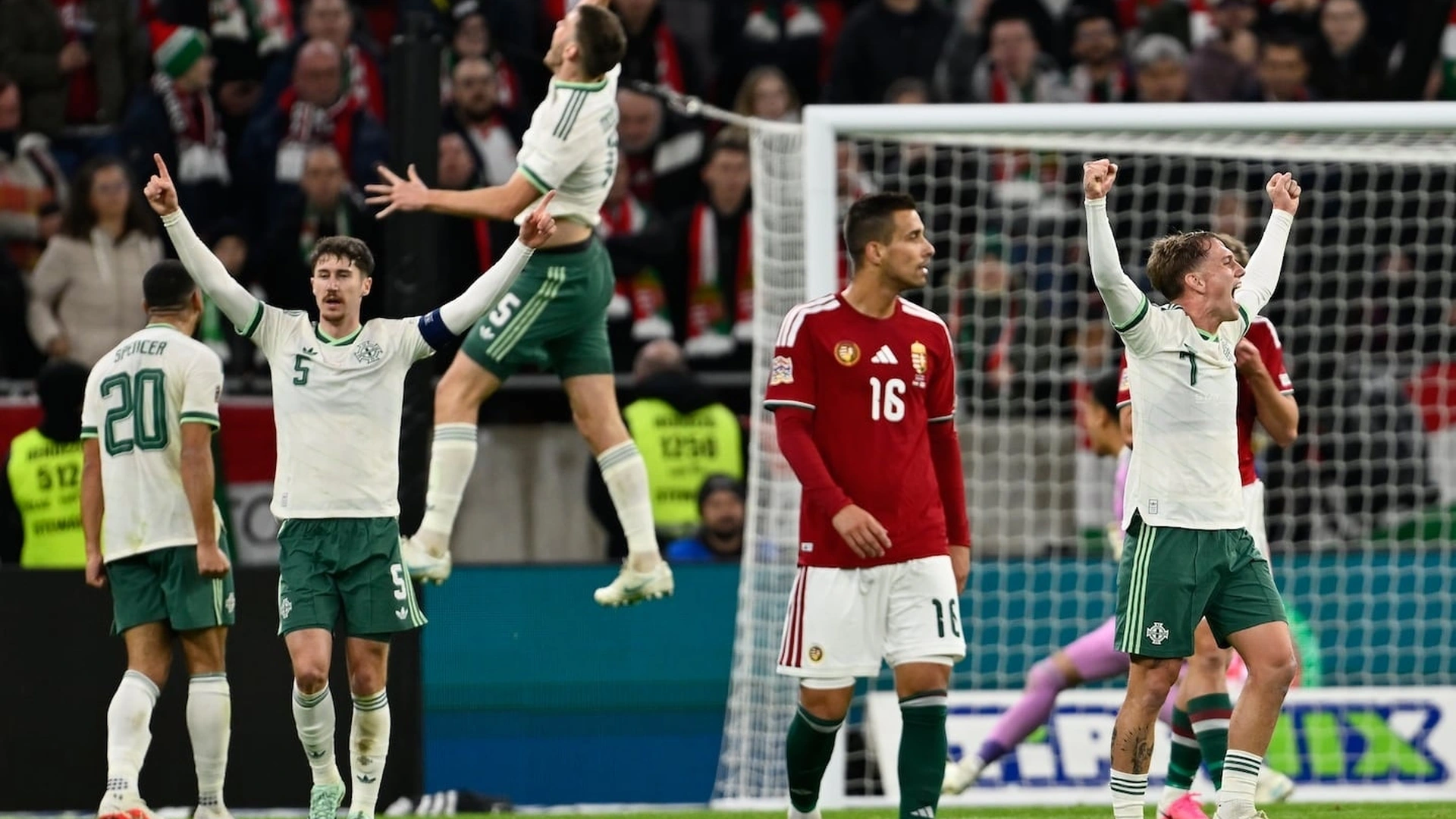
The decisive match was played on 17 November and finished 1-1. Hungary led during the first half, before Devenny equalised with a powerful strike in the 65th minute. Northern Ireland completed the group unbeaten, with three wins and three draws, and finished on 12 points.
The response mattered more than possession
Falling behind placed the promotion plan under immediate pressure. Northern Ireland could not simply defend the edge of their penalty area, yet chasing the game too quickly would have created the transitions Hungary wanted. O’Neill’s side instead kept the distances short and chose moments to move the ball into wider areas.
Devenny’s goal provided the quality that a tight match required. The midfielder did not need a long spell of dominance to change the score; he recognised the shooting opportunity and struck with conviction. After the equaliser, the visitors returned to the disciplined work that had carried them through the group.
League A is a reward for consistency
Promotion was not built on one night alone. Northern Ireland conceded only once in six group matches and repeatedly found ways to protect narrow advantages or useful draws. That defensive record reflects more than the work of the back line. The forwards pressed passing lanes, the midfield tracked runners and the entire side accepted the need to defend second balls.
The move into League A will bring stronger opponents and longer periods without possession. It will also give a young group the chance to test its organisation at a higher speed. The challenge is to keep the same collective discipline while becoming more efficient when counter-attacking opportunities appear.
Set-pieces will become another area of emphasis at the higher level. Northern Ireland already defend the box with commitment, but stronger opponents can vary deliveries and keep attacks alive after the first clearance. Clear roles around the edge of the area will be needed to prevent a successful initial header from turning into a second wave.
Budapest will be remembered for Devenny’s finish, but the broader achievement belongs to a squad that stayed unbeaten under sustained pressure. Reaching the top tier for the first time gives Northern Ireland a measurable sign of progress. The next task is not merely to enjoy that status, but to make the team difficult to dislodge when the standard rises again.