
Mauricio Pochettino’s first Premier League match at Old Trafford arrives with Manchester United sitting 19th. The early red card in the defeat at Liverpool was later overturned, and a chaotic 2-2 Champions League draw at Sporting followed, but explanations cannot replace points. Brentford will arrive knowing that anxiety inside the stadium can become another obstacle for the home side.
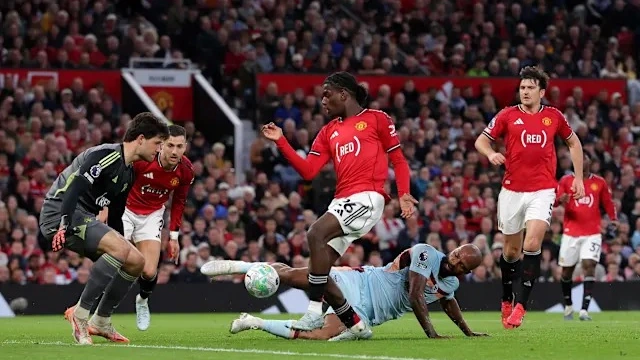
The visitors have not won any of their last ten Premier League away matches, yet their defensive organisation remains difficult to break down. They keep short distances between midfield and defence, protect the centre and challenge opponents to find accurate combinations near the touchline. United will need movement rather than a succession of hopeful crosses.
Old Trafford hosts the game at 15:00 GMT on 28 November. United have lost two of their last three league meetings with Brentford. Only two managers in the club’s history have lost their first two league matches, which underlines the immediate pressure on Pochettino.
The home side must give the ball carrier two clear options
Brentford are comfortable when an opponent passes slowly in front of them. United can change that by placing one player between the lines and another running beyond the defence. The ball carrier then has a short option and a route forward, making it harder for the visitors to step out together.
United’s shape behind the attack will be just as important. If both full-backs advance while the holding midfielder is drawn towards the ball, Brentford can attack a large central space after one interception. United should keep at least three players ready to stop the first counter and force the visitors away from goal.
A simple win would be more valuable than a dramatic performance
The occasion may tempt United to attack at maximum speed from the first whistle. That approach could excite the crowd, but it also risks turning the match into a series of transitions. Pochettino’s priority should be a repeatable structure: recover the ball quickly, circulate it with purpose and avoid giving Brentford easy set-pieces.
Brentford do not need to take early risks. They can wait for mistakes and use dead-ball situations to create pressure. United therefore have to show patience without becoming passive. A controlled victory would give the new manager a firmer platform than an entertaining match in which the same defensive problems remain visible.