
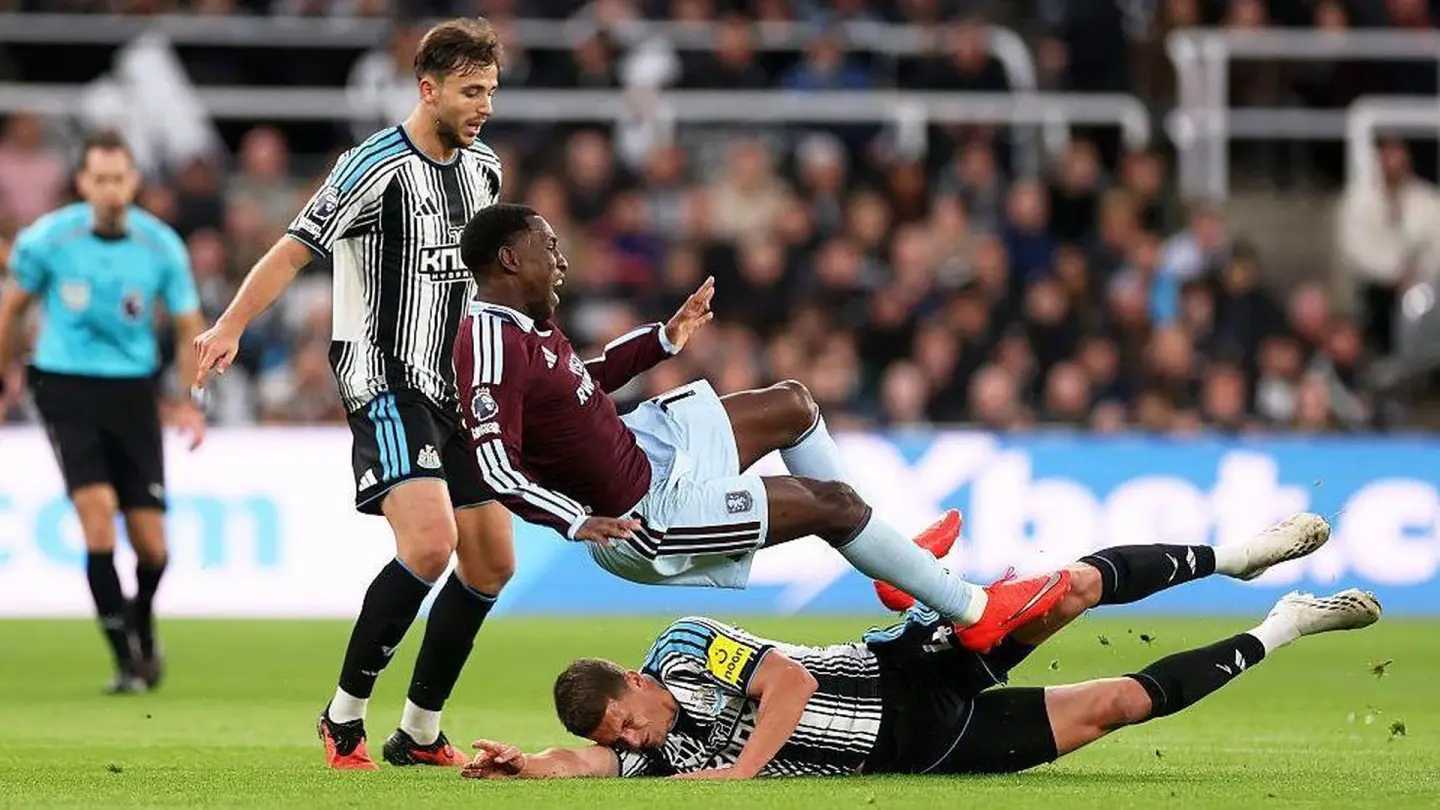
The referee showed a yellow card in the 18th minute
Botman caught Jackson with his trailing leg during the first half. The referee judged the challenge reckless and showed a yellow card. VAR checked the incident but did not recommend an on-field review.
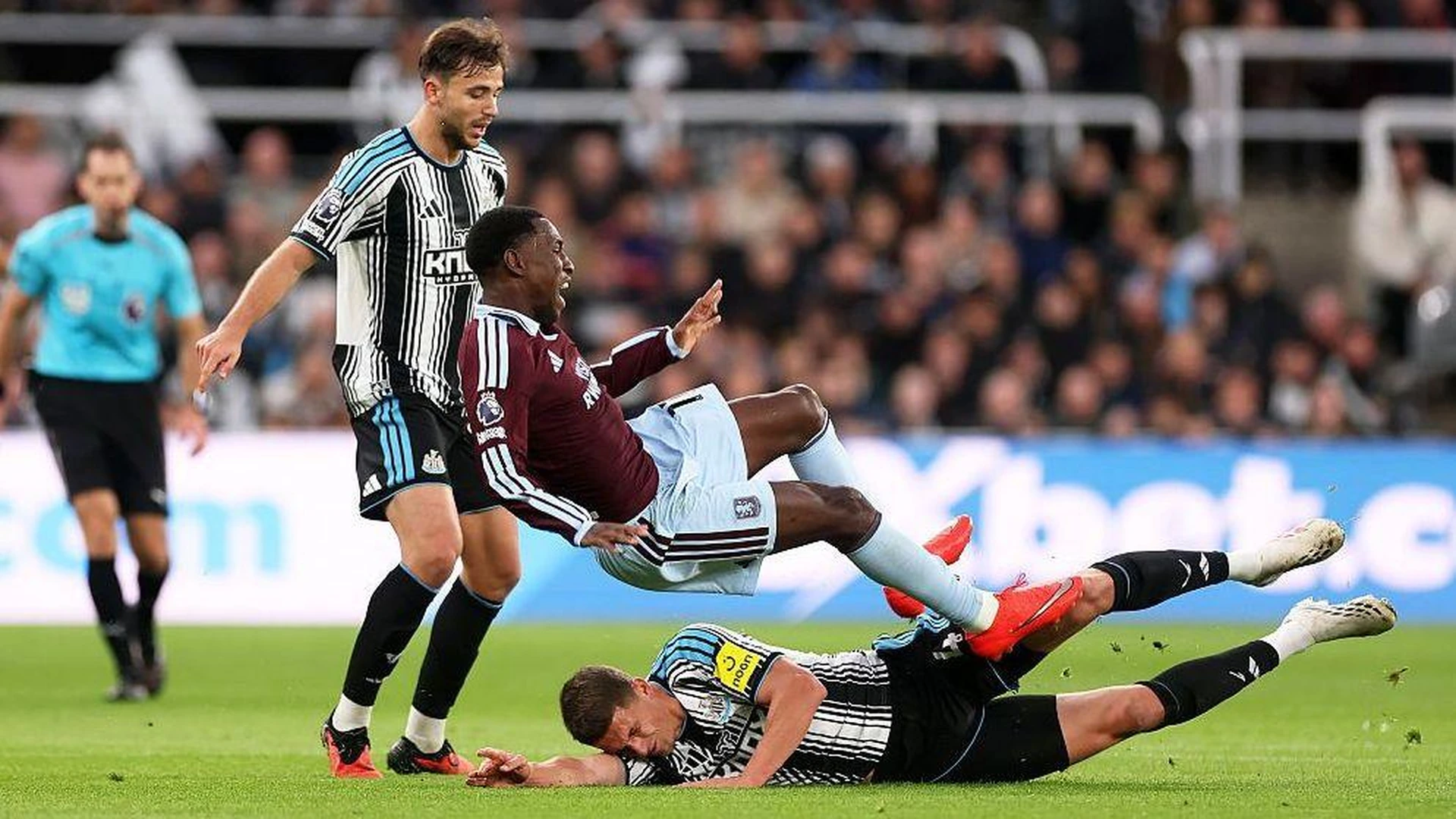
Webb said the contact was serious enough for a booking but did not include exposed studs or a closing scissor action. In his view, those details kept the challenge below the clear threshold for a red card.
A red card would also have been allowed to stand
Webb described the incident as a high-end reckless challenge. He said it was a referee’s call: VAR would have supported the original decision whether the referee had chosen yellow or red.
That does not mean the two punishments are identical. It means video officials did not see a clear and obvious error that justified replacing the referee’s judgement. VAR was checking the decision made on the pitch, not judging the challenge again from the beginning.
VAR has intervened 21 times after seven rounds
The Premier League recorded 21 VAR interventions in the first seven rounds, including nine decisions based on a referee’s judgement rather than a simple factual check. Webb said one intervention was wrong and one penalty incident was missed.
The Botman decision was not included among those errors. Aston Villa kept the match at 11 against 11 and later won through Manzambi’s goal. The result does not change the review, because Webb’s explanation concerns only the evidence available for the 18th-minute challenge.
Webb separated judgement calls from factual checks
An offside line or a ball crossing a boundary can usually be checked as a fact. A tackle requires the officials to judge speed, force, the point of contact and the position of the studs. That leaves a narrow range in which either a yellow or red card can be accepted.
Webb placed the Botman incident inside that range. His explanation does not say the tackle was harmless: it says the yellow card was not a clear mistake that video officials had to overturn.