
Bournemouth and Nottingham Forest both arrive with renewed confidence, but for different reasons. The hosts have built a four-match winning run through organised pressing and quick combinations around the penalty area. Forest, meanwhile, hope that a 3-1 win over Manchester City marks the start of greater accuracy in front of goal.
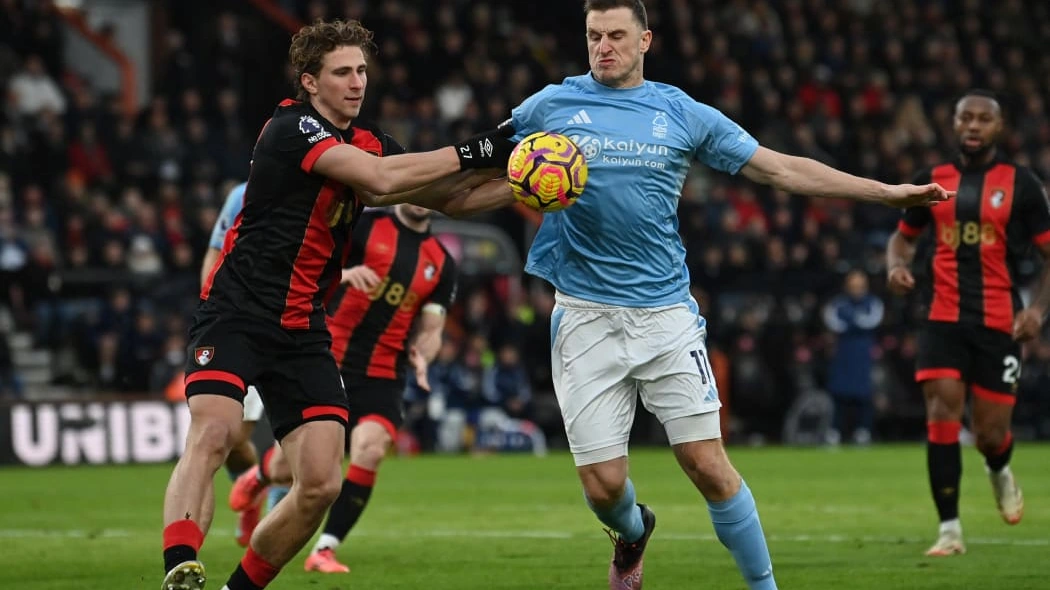
The match is scheduled for 21 November at the Vitality Stadium. Forest ended a five-game winless run before the pause for international matches, with Liam Delap scoring twice. Their expected-goals numbers had suggested a team creating enough chances to sit higher than 16th, but inaccurate shooting had repeatedly turned promising displays into dropped points.
Forest need Delap to engage both centre-backs
Delap’s physical presence is most valuable when he holds off one defender and still threatens the space behind. If he can draw both Bournemouth centre-backs towards him, Forest’s wide players will have more room to receive the ball. The visitors should avoid leaving him isolated while the midfield takes too long to move forward.
Bournemouth can respond by blocking early passes into Delap’s feet. Their press is designed to force play towards the touchline, where the receiving player has fewer options. Winning the ball there would allow the hosts to attack before Forest’s midfield can reorganise.
Bournemouth can attack before Forest reorganise
Bournemouth are most dangerous when they win the ball and play forward before Forest rebuild their midfield line. An early pass towards a winger can force the visiting full-back to turn, while a midfielder arriving later can offer an option for a cut-back. Those movements can create a clear chance without a long period of possession.
Forest’s win over City changed the mood, yet Bournemouth present a different problem. The hosts will press with energy and are comfortable attacking quickly after winning the ball. Forest must prove that their greater accuracy in front of goal can be repeated without losing defensive control. Bournemouth, in turn, need to prevent one powerful centre-forward from changing the match.